A Writer’s Income, Family Influence and the Careers Parents Put on the Map
Two bestsellers haven’t made writing a reliable family income. A daughter’s first book prompts a broader look at careers, pay and what children learn at home.
A six-year-old’s handmade book can bring a parent pride and an uncomfortable question: what if a child follows a creative path that offers little financial security? For one author, a daughter’s story about a rabbit, a seal and a lamb has brought the economics of career choice into sharper focus.
The concern comes from experience. The author accepted a book deal with Portfolio Penguin in 2019 partly to show his children what sustained effort could produce. After spending two and a half years developing, writing, editing and marketing a book, he hoped they’d connect education and discipline with making something tangible. He has since published two national bestsellers, Millionaire Milestones and Buy This Not That, and is working on a third, Your Children Will Be OK, due in Fall 2027.
Yet bestseller status hasn’t made writing a dependable way to support a family. By his account, book income alone wouldn’t cover his family’s current life in San Francisco. The trade-offs would include a smaller home, fewer meals delivered, no weekly date nights and vacations spent mostly at home. That gap between cultural visibility and earning power is central to his worry: children may inherit a parent’s interests without inheriting a viable financial model.
The economics behind a writing career
Professional writing is difficult to sustain as a sole source of income. Many writers do it alongside other work, much as aspiring actors often take jobs outside their field while they wait for opportunities. Advances and royalties can limit earnings even for books that sell exceptionally well: the author says that books in the top 0.3% of sales in a given year may still bring in less than $100,000 annually from writing alone.
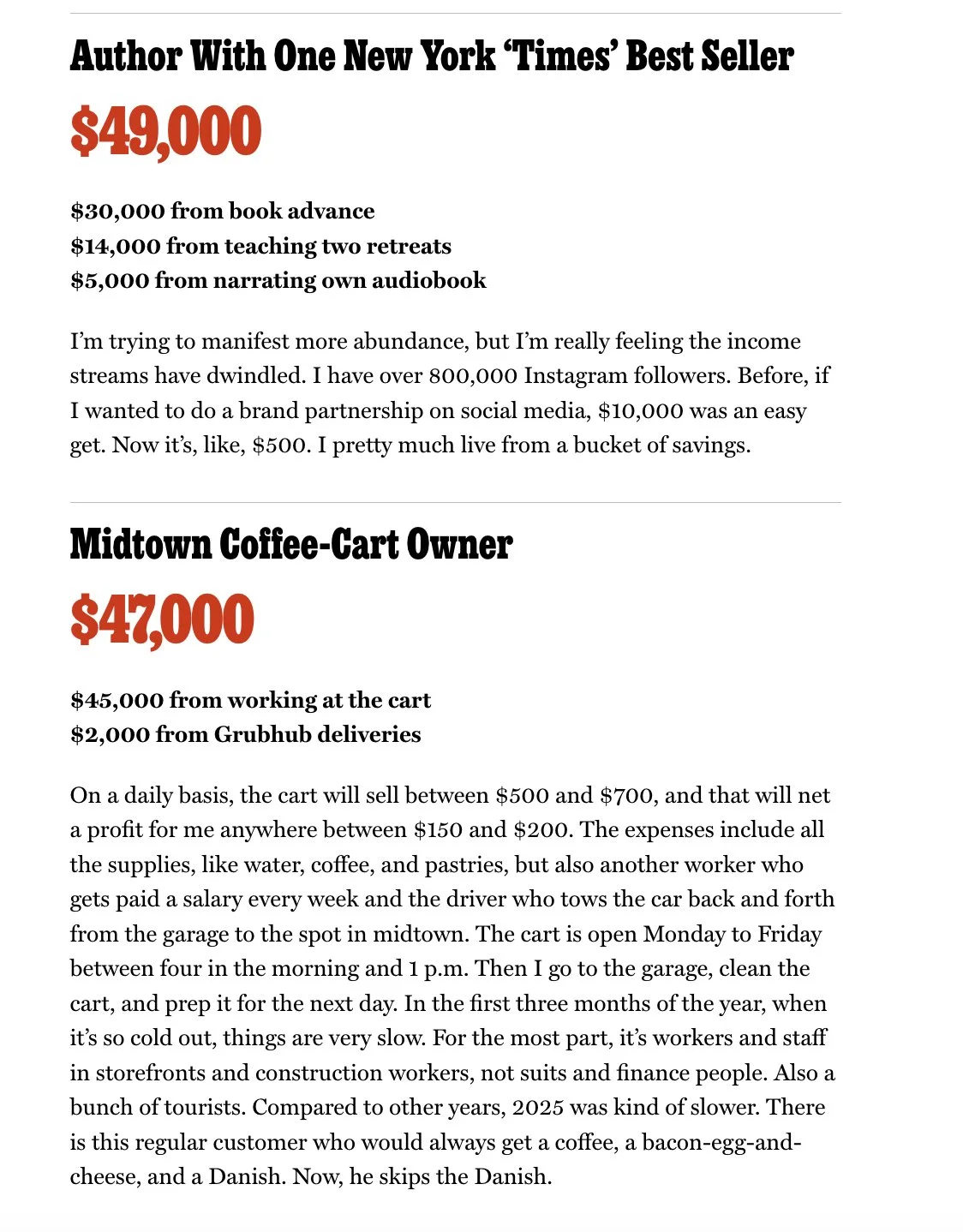
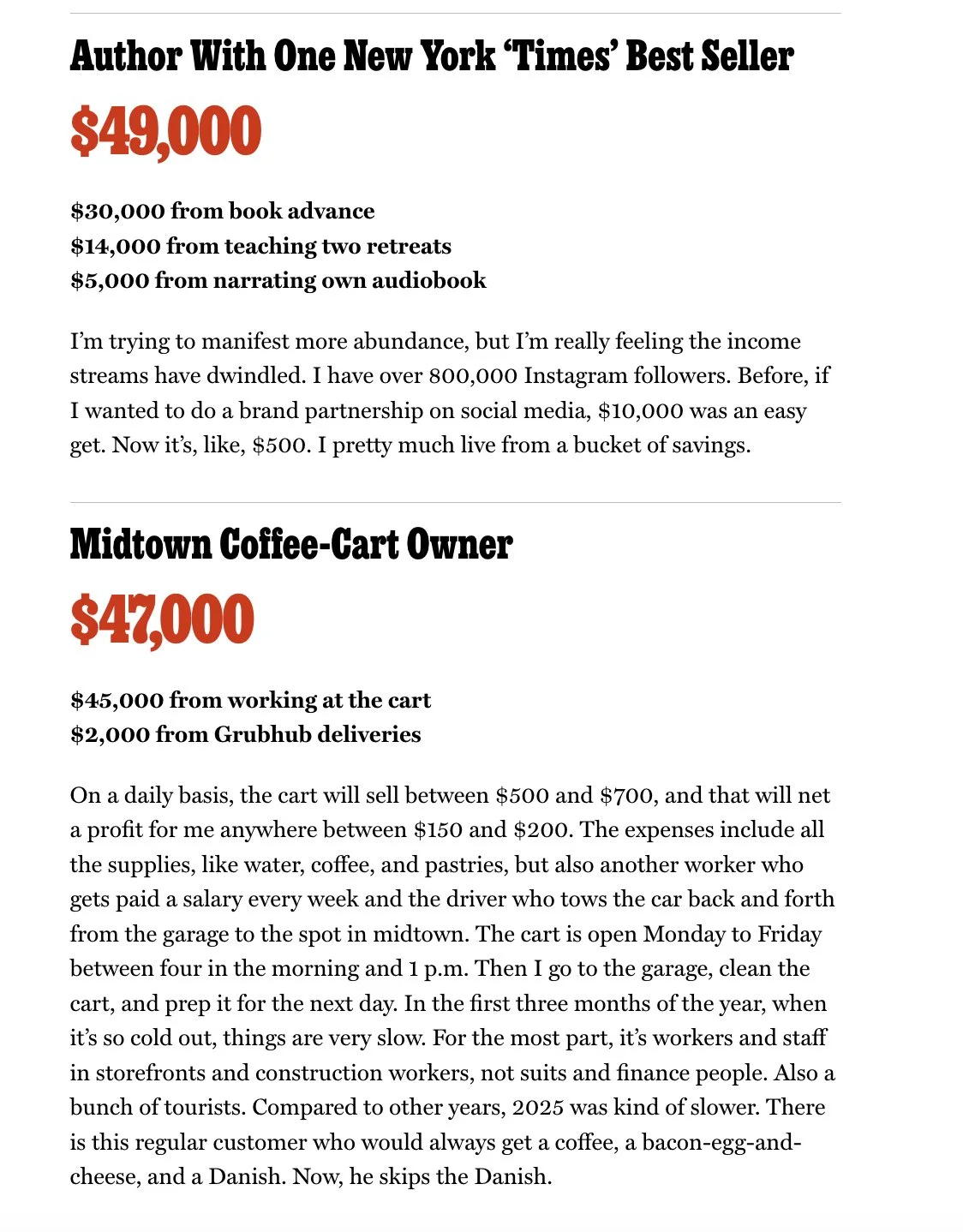
He points to a New Yorker profile of a New York Times bestselling author whose annual income was $49,000, and cites roughly $10,000 a year as the median income earned by authors. Those figures don’t make writing worthless. They do show why artistic achievement and financial stability can pull in different directions.
The author also puts the career in the context of family costs. He estimates that by the time his children finish college in 14 to 17 years, the median rent for a two-bedroom apartment in San Francisco could reach $10,000 a month, up from about $6,200 today. That’s a projection, not a guaranteed outcome, but it captures the pressure he sees: a lengthy and expensive education followed by low typical earnings can make the financial returns difficult to justify.
That calculation doesn’t account for every benefit a creative career can bring, and median figures can’t predict any one writer’s experience. Some people value autonomy, expression or the chance to solve a problem for readers enough to accept lower pay. The author himself says the work is motivated by having something to say. The tension is that passion may help sustain the work while doing little to steady its income.
A child’s early interest changes the question
One morning, after dropping the children at school, the author found a small stack of pages tucked into the sofa. The cover read, “the rabbit Seal and Lamb book!” His wife first thought their son had made it; he had been writing chapters of fantasy fiction. A closer look showed the handwriting belonged to their six-year-old daughter. She confirmed it after school, with every word spelled correctly and an exclamation point at the end.
The moment brought happiness and unease at once. The author values the way reading, writing and speaking can expand a child’s sense of what’s possible. But he also worries that his daughter may be taking up a career with weak earning prospects simply because it is familiar at home. His concern extends to his son, too: he argues that artificial intelligence is putting pressure on creative and knowledge-based work, though the source doesn’t give figures to quantify that effect.

Children often encounter their parents’ work repeatedly, through conversations, routines and the problems adults spend time solving. Familiarity can make a field feel accessible and interesting. The author sees this as one reason family influence can persist across generations, alongside more direct advantages such as access and connections.
Examples span entertainment, sports and business. Archie Manning’s sons, Peyton and Eli, both won Super Bowls; the article also notes that Manning’s grandson may have a chance to play professionally. Goldie Hawn’s daughter Kate Hudson built a career in entertainment. Natalie Cole followed her father, Nat King Cole, into jazz and pop, while Miley Cyrus’s career is another example of a child working in the same broad field as a musician parent, Billy Ray Cyrus.
In business, Ralph Lauren’s children pursued their own ventures and leadership roles. David Lauren founded a lifestyle magazine while at Duke and later became a senior executive at Ralph Lauren Corporation. Dylan Lauren founded Dylan’s Candy Bar, which grew into a retail brand. The author also cites the Pritzkers, Waltons, Murdochs and Johnsons of Fidelity as families where wealth and professional identity have passed between generations.
These examples make the pattern visible, but they don’t establish that family influence alone determines a child’s path. Access, resources, personal aptitude and a child’s own choices all matter. The author’s point is narrower: parents teach through what they make part of everyday life, even when they aren’t deliberately directing a child toward a profession.
Pay varies sharply across fields and workplaces
To help families see the range of potential earnings, the article presents compensation estimates drawn from Bureau of Labor Statistics data and surveys by Glassdoor, Levels.fyi and the Association of American Medical Colleges. The figures below reproduce its stated estimates; actual pay can differ by employer, location, experience and specialty.
| Career | Typical degree or training | Median starting salary | Median mid-career salary |
|---|---|---|---|
| Physician / Surgeon | MD + Residency (11-15 yrs) | $60,000 (residency) | $240,000 – $400,000+ |
| Dentist | DDS/DMD (8 yrs) | $120,000 | $170,000 – $250,000 |
| Pharmacist | PharmD (6-8 yrs) | $115,000 | $130,000 – $160,000 |
| Petroleum Engineer | BS Engineering (4 yrs) | $95,000 | $145,000 – $200,000 |
| Software Engineer (Big Tech) | BS Computer Science (4 yrs) | $130,000 – $180,000 | $200,000 – $400,000+ |
| Investment Banker | BS Finance/Economics (4 yrs) | $110,000 – $150,000 | $250,000 – $500,000+ |
| Management Consultant | BS + MBA preferred (4-6 yrs) | $90,000 – $110,000 | $150,000 – $300,000 |
| Corporate / M&A Lawyer | JD (7 yrs) | $95,000 – $215,000 | $200,000 – $500,000+ |
| Actuary | BS Math/Statistics (4 yrs) | $75,000 | $130,000 – $200,000 |
| Nurse Anesthetist (CRNA) | MSN (6-8 yrs) | $140,000 | $180,000 – $230,000 |
| Pilot (Commercial / Airline) | ATP Certificate (4-6 yrs) | $80,000 | $180,000 – $350,000 |
| Orthodontist | DDS + Specialty (10 yrs) | $130,000 | $250,000 – $400,000 |
| Financial Advisor / Wealth Manager | BS + CFP (4-6 yrs) | $65,000 | $120,000 – $300,000+ |
| Data Scientist (AI/ML) | BS/MS Computer Science (4-6 yrs) | $110,000 – $140,000 | $160,000 – $300,000 |
| Real Estate Developer | BS + Experience (4+ yrs) | $70,000 | $150,000 – $500,000+ |
The list excludes journalism, teaching, social work, writing and the arts, fields the author describes as meaningful but poorly paid. He argues that families should discuss the cost of education and likely earnings before a young person commits years and tuition to a chosen course. The estimates are a starting point for comparison, not a complete account of career value or an assurance of individual pay.
He also cautions against treating a field as a salary guarantee. The article suggests that compensation for a financial advisor at a small regional firm could differ by five times or more from that of a wealth manager at a top private bank. It makes a similar comparison between lawyers at mid-size firms and partners at large firms. The employer and role can matter as much as the job title.
Technology presents another uncertainty. The article describes software engineering and data science as fields where a four-year degree can lead to a six-figure starting salary, while warning that AI could make some coding work less scarce. Its proposed response is to pair technical understanding with financial skills, including learning to invest. That view is a forecast about work, not a settled account of how every technology role will change.
Make money and investing part of ordinary conversation
Rather than trying to demonstrate a profession he doesn’t have, the author plans to show his children how investing works. He sees this as an accessible way for parents in many occupations to pass on financial knowledge, whether their household assets are in stocks, rental property, venture investments or retirement accounts.
That could mean talking at dinner about what moved a market or sector, what decision a parent made and why. Repeated exposure can make ideas such as price-to-earnings multiples, bear markets, dollar-cost averaging, corrections and growth versus value stocks familiar before a child is old enough to manage money independently. The aim, in his telling, is to build financial fluency through everyday discussion rather than pressure a child into a particular job.
His own interest began with a conversation at breakfast. In 10th grade, he was earning $4.25 an hour at McDonald’s and the same rate at a temporary agency, where he moved furniture and folded envelopes. After seeing his father read stock ticker symbols in a newspaper, he asked what they meant. They followed several stocks together for the next month.
The author traces a long chain of later choices back to that exchange: studying economics at William and Mary, applying for investment banking roles at a Washington, D.C., career fair, working at Goldman Sachs and Credit Suisse, saving aggressively for 13 years and leaving in 2012 after starting Financial Samurai in 2009. He presents the conversation as the spark that helped shape his financial life, not as a formula that will work the same way for every child.
That distinction shapes his intended approach at home. He wants to introduce his children to economics, markets and rental property alongside conversations about school and friendships. Parents can also make their own finances less opaque: understand their investments, do their own taxes or learn enough to ask informed questions. A child may absorb practical habits simply by seeing an adult engage with money.
Guidance without taking over
The author’s larger argument is that parents should widen a child’s view of possible paths and share the financial consequences while there’s still time to adjust. That doesn’t require telling a child to choose the highest-paying field. It means making room for both questions: what kind of work feels meaningful, and what kind of life can its likely earnings support?
His daughter’s homemade book leaves that tension unresolved. Encouraging her creativity could help a genuine interest take root; explaining the economics of writing could give her a clearer view of the trade-offs. The useful inheritance may be the chance to explore widely, see how work and money connect, and choose with open eyes.
For parents, that starts with what they bring into daily life. A career can influence a child through example, but so can curiosity about markets, thoughtful money habits and honest conversations about pay. The first book tucked into a sofa may be a sign of a lasting passion—or simply a child trying something new. Either way, the parent’s task is to help make more than one future visible.