Euro Holds Near US$1.1148 as ECB Decision Meets Heavy Short Positioning
The euro is down 2% in October as traders weigh France’s debt concerns, the ECB’s inflation stance and shifting expectations for US interest rates.
The euro’s steady session near US$1.1148 masks a market leaning sharply against the currency. Traders have built their largest short position in a decade, worth US$18.89 billion, while investors weigh France’s debt pressures, the European Central Bank’s inflation outlook and a shift in expectations for US interest rates.

The currency was little changed on Thursday, Oct 29, ahead of an expected ECB decision to leave rates unchanged. It has still fallen 2 per cent against the US dollar in October and around 2.5 per cent against the pound. For 2026, the euro is down 5.1 per cent against the dollar.


Positioning leaves room for a sharp move
The scale of bearish positioning creates the possibility of a rebound if the ECB’s message surprises traders. Chris Beauchamp, chief market strategist at IG, said the recent declines against both the dollar and sterling had made the trade feel one-sided, leaving some investors uneasy. The short-position figure comes from weekly data cited from a US regulator.

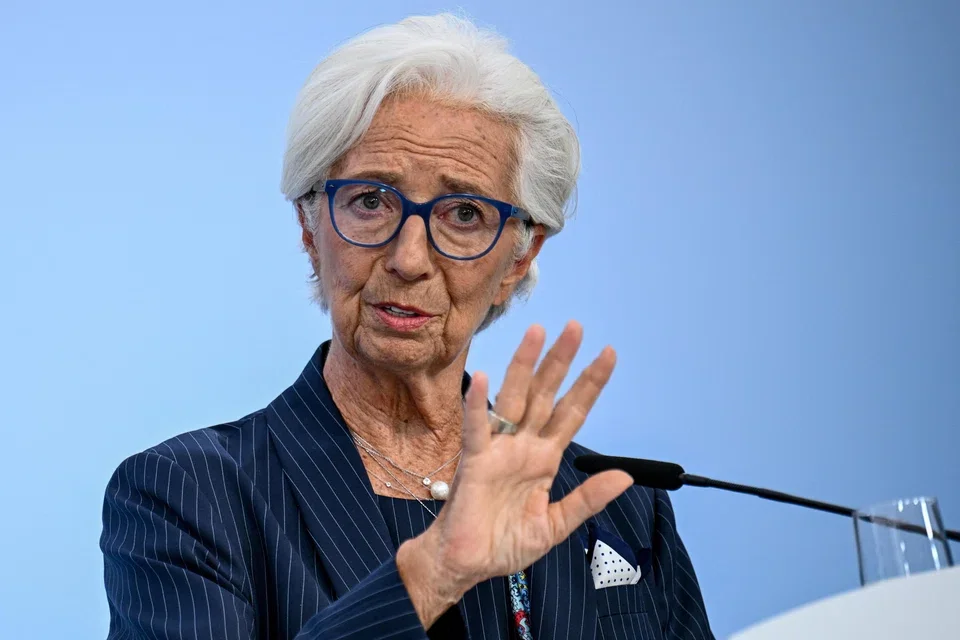
Beauchamp said a firm emphasis on inflation from ECB president Christine Lagarde could support the euro. Traders were assigning an 82 per cent chance to a rate increase in December, while market pricing also reflected the possibility of a second increase before April. A stronger signal from the ECB than from the US Federal Reserve could catch some traders positioned for further euro weakness, he said.

That possible currency lift comes with a trade-off for the eurozone. Rushabh Amin, a portfolio manager on the multi-asset team at Allspring Global Investments, warned that two more rate increases by this time next year could deepen pressure on an economy already facing high energy prices and rising stagflation risks. The same rate outlook that could lend support to the euro may therefore increase strain on businesses and households sensitive to borrowing costs.

France is another weight on the currency. Concern about the country’s ability to manage its large debt burden has pushed down French government bonds and raised questions about other heavily indebted euro-area countries. Those concerns are part of the backdrop to the ECB meeting, alongside inflation and the leadership uncertainty created by Lagarde’s decision to leave before her term ends.

US rate expectations ease after Fed comments
The dollar steadied after retreating from a two-week high the previous day. Its index, which measures the currency against a basket of six others, stood at 102.2. The two-year US Treasury note yield, which tends to track expectations for near-term Fed rates, fell four basis points to 4.695 per cent, extending a decline that began after Fed chair Kevin Warsh spoke.
The Fed left borrowing costs unchanged and described economic growth as strong. Warsh said inflation could return to the 2 per cent target without slowing growth or raising unemployment. His remarks prompted traders to reduce expectations for rate increases in 2027, helping explain why the dollar had softened from its recent high even as it remained firm on Thursday.
Warsh also said the Fed would set aside one of its eight regular meetings in 2027, and two meetings the following year, to discuss major issues facing the institution. Those sessions would not be used to consider interest-rate changes. The distinction matters for currency markets because the scheduled meetings used to set rates remain separate from the additional discussions.
The two central-bank outlooks leave currency traders comparing different risks. A more forceful ECB stance on inflation could challenge the euro’s bearish positioning, while the Fed’s confidence in containing inflation without restraining growth has reduced some expectations for future US rate increases. Neither signal settles the broader question of how rates will evolve; the market response will depend on the balance between price pressures and economic activity.
Yen and New Zealand dollar also in focus
Investors were also watching the Bank of Japan, whose two-day meeting was due to conclude on Friday. It was expected to keep rates steady. The yen edged lower, with the dollar up 0.1 per cent at 158.
The New Zealand dollar slipped 0.18 per cent to 0.5615 against the US dollar on Thursday. It had dropped nearly 2 per cent after the Reserve Bank of New Zealand unexpectedly held its rate at 2.75 per cent on Wednesday. The move illustrates how a decision that differs from market expectations can quickly reset currency pricing.
For the euro, the immediate test is whether the ECB gives traders reason to question their crowded bearish stance. France’s debt concerns, energy costs and the risk of higher rates remain counterweights. The currency’s next move will turn on how those pressures compare with the possibility that traders have become too one-sided.