Singapore Caps Private-Hire Car Financing at 70% for Many Individual Buyers
From Oct 30, individual private-hire car buyers face the financing limits for private cars. The change aims to curb over-borrowing, though COE demand may hold.
Individual buyers in Singapore will face tighter financing limits when purchasing private-hire cars (PHCs) from Friday, Oct 30. The change closes a route that some buyers may have used to access more permissive terms, but industry observers expect little effect on Certificate of Entitlement (COE) premiums.

For PHCs with an open market value (OMV) of S$20,000 or less, the maximum loan will be 70 per cent of the purchase price, including taxes and the COE premium. For vehicles with an OMV above S$20,000, the cap is 60 per cent of the total price. Financing tenure will be limited to seven years in both cases.
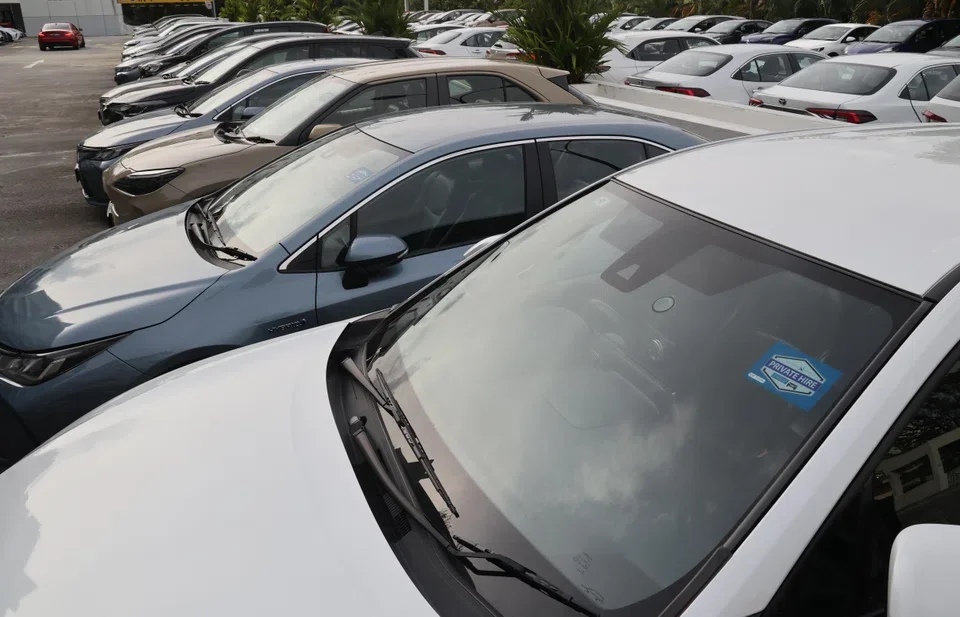
The restrictions cover vehicle loans from financial institutions and licensed or exempt moneylenders, as well as hire-purchase and conditional-sale agreements. They apply to individuals buying PHCs, including people operating as sole proprietors. Commercial vehicles such as goods vehicles and buses, PHCs owned by businesses, and motorcycles are excluded.

Why the rules are changing
Previously, individual-owned PHCs were exempt from the financing limits applied to private cars because they were intended for commercial use. The transport, monetary, energy and law ministries said they had seen more individual buyers use that exemption without plans to provide ride services.

They pointed to around 500 individual-owned self-drive PHC registrations per month in a recent surge, saying some buyers may have been seeking the more flexible financing terms. The stated aim of the change is to prevent PHC purchases from being used to get around private-car financing limits and to encourage buyers to borrow within their means.

A separate COE category for PHCs was also considered. The ministries said that approach could increase rental costs for drivers and fares for passengers, potentially affecting people who do not own a car or cannot drive. More prescriptive conditions for PHC drivers and vehicles could also reduce the flexibility available to meet demand for rides.

Another financing route may receive closer attention. The ministries said they would monitor market developments and consider applying the same limits across financing arrangements, including in-house loans offered by dealers.

Debt concerns and remaining routes
The change comes amid wider concern about ways around car-financing limits. Data obtained by The Straits Times put Singapore household vehicle debt at roughly S$12.4 billion by late 2025, its highest level in 12 years. The Monetary Authority of Singapore reintroduced financing limits for privately owned cars in 2013, with the stated purpose of encouraging financial prudence.

Industry representatives and dealers described the PHC change as closing a significant gap. Glenn Tan, president of the Motor Traders Association of Singapore, said it “closes one shortcut to get a 100 per cent car loan”. Nicholas Wong, chief executive of Honda distributor Kah Motor, called it a “good measure that helps to close the gap for this issue”.

Still, the rules may not block every route. Buyers could register a private limited company and purchase a car through it, Tan and Wong said. Tan cautioned that “the change is not totally foolproof”, citing the possibility of setting up a company with S$1 starting capital, though he said that brings other requirements. The exclusion for business-owned PHCs means the distinction between genuine commercial use and financing strategies remains relevant.

Dealer in-house loans are another potential gap. These loans are not offered by financial institutions or the licensed and exempt moneylenders covered by the new restrictions. Transport Minister Jeffrey Siow has described them as effectively unsecured personal loans. Vincent Ng, an automotive business consultant at Vincar Group, said in-house financing generally carries higher interest rates to reflect the additional risk taken by finance companies. He viewed tighter limits on that channel as a way to reduce risk.

Drivers and COE demand
The change could make car ownership harder for people who need a vehicle but cannot afford a large down payment. Soh Ming, chief executive of vehicle distributor Volt Auto, said buyers in that position could be left out, even as the limits encourage more cautious borrowing.

Existing borrowers are not expected to be affected. In a social media post, Yeo Wan Ling, assistant secretary-general of NTUC and an adviser to the National Private Hire Vehicles Association, said drivers with existing loans had been assured they would not be affected. She also warned that vehicle financing directly affects drivers’ ability to earn a living. The association will watch for effects on access to vehicle ownership, reliance on rental fleets and operating costs for drivers.

Analysts and industry participants do not expect the change to lower COE premiums. A spokesperson for PHC rental company Lumens said few new cars had been registered as PHCs that year, limiting the potential effect on COE demand. The spokesperson also said in-house loans made up an extremely small share of the market in the current environment.
Wong likewise expects PHC demand to persist. The tighter limits close one avenue for circumventing financing hurdles, he said, but larger fleets have more capacity to bid at higher prices than individual buyers. The near-term question is whether the new limits change who can finance a PHC and how they do so; their effect on the broader COE market may be modest.


