Bank of Japan Holds Rate at 1.25% as Inflation Target Comes Into Reach
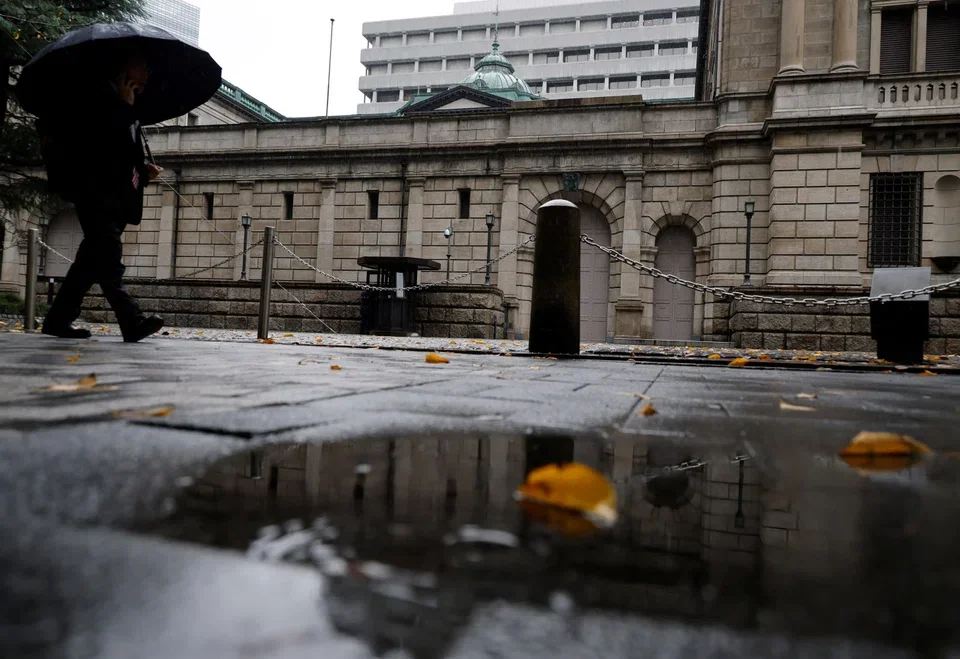
The BOJ kept its rate at 1.25% but shifted its focus to containing inflation near 2%, with a December increase in view.
The Bank of Japan’s message has shifted from trying to lift prices to keeping inflation near its 2 per cent goal. It held its policy rate at 1.25 per cent on Oct 30, as expected, but its new outlook points to a central bank more alert to price pressures and open to raising rates again as soon as December.

That change matters for households, businesses and borrowers because the BOJ’s rate decisions now turn on whether inflation stays anchored around the target, rather than whether price growth can reach it. The central bank said underlying inflation was generally consistent with 2 per cent and expected to remain around that level. Its task, it said, is to assess whether that trend is firmly established.

A different test for rate decisions
The rate hold gives the BOJ more time to judge how previous increases are affecting lending conditions. But one member of its board, Hajime Takata, dissented and proposed lifting the rate to 1.5 per cent. That split makes clear that the pace of future tightening remains an open question, even as the central bank’s stated priorities change.

“By judging that underlying inflation has reached 2 per cent, the BOJ has changed what it is trying to do: it is no longer a central bank trying to get to its target, it is one trying to keep inflation from running away from it,” said Shoki Omori, chief Japan fixed income strategist at Deutsche Securities. He said markets should account for that change in how the BOJ responds to economic conditions.

The distinction is consequential. For years, the central bank focused on overcoming weak or falling prices. Its 2013 stimulus programme under former governor Haruhiko Kuroda aimed to pull Japan out of deflation and generate inflation. The BOJ ended its mix of unusual easing measures in 2024, but it continued to raise rates carefully while judging that underlying inflation remained below target.

Now, the central bank says the balance of risks has shifted. Its outlook report said the BOJ previously had to pay close attention to downside risks to prices; it must now guard against underlying inflation exceeding 2 per cent. The report also described long-term inflation expectations as “moving around 2 per cent”, suggesting that households and businesses may increasingly expect sustained price and wage gains.

Forecasts and financial conditions
The BOJ raised its forecast for core consumer inflation in the fiscal year ending March 2028 to 2.6 per cent, from 2.4 per cent in its previous outlook three months earlier. It also upgraded its estimates for “core core” inflation, which excludes fuel costs, for fiscal 2027 and fiscal 2028. The changes strengthen the case for watching how persistent price growth develops, while leaving uncertainty about how quickly the central bank will act.

Financial conditions remain accommodative in the BOJ’s assessment, but real interest rates are “rising recently”. That wording marks a change from July, when the central bank said real rates were negative mainly in short- to medium-term zones. The shift suggests that earlier rate increases are beginning to alter borrowing conditions, though the BOJ has not said that financial conditions have stopped supporting activity.

Japan is also facing pressure from stubbornly high energy costs and higher import prices associated with a weak yen. The BOJ raised rates in June and again in September, a shorter gap than the roughly twice-yearly increases in 2024 and 2025. Those price pressures support the case for further increases, while the effects on lending and household demand give the central bank reason to proceed carefully.
Balance sheet shift adds to the signal
The decision to speed up sales of exchange-traded funds adds another dimension to the change in direction. Starting in January, the BOJ plans to sell 860 billion yen (US$5.45 billion) a year, compared with 330 billion yen at present. The move surprised market participants, and analysts interpreted it as a sign of greater confidence in the economic outlook.
Masahiko Loo, chief fixed income strategist at State Street Investment Management in Tokyo, described the sales plan as part of a broader effort to normalise the BOJ’s position while avoiding disruption to markets. The scale and pace of those sales will therefore matter alongside rate decisions: they offer a separate indication of how the central bank intends to unwind assets accumulated during its long period of support.
Most analysts surveyed by Reuters expect the BOJ to lift its policy rate to 1.5 per cent in December, with further increases next year. Their projections for the eventual peak are centred on 1.75 per cent to 2 per cent. Those are expectations, not commitments from the central bank; its next steps will depend on price trends and the effects of past increases.
For Japanese households, the turn toward controlling inflation brings a practical tension. Higher prices can encourage wage gains and shift expectations after a long period of weak price growth, but they can also stretch budgets. The source report says households are seeking discounts as prices rise. The BOJ’s challenge is to keep inflation near its goal while rate increases and living costs weigh on borrowing and consumption.