DBS Leads Asean Brand Rankings as Grab Value Jumps 53% in 2026
Asean’s top 500 brands rose 8% to US$315.6 billion. DBS stayed No. 1 as Singapore brands gained ground across finance, travel and hospitality.
Singapore’s brands had the region’s strongest showing in Brand Finance’s 2026 Asean rankings: 23 made the top 100, and the country’s 88 ranked brands carried a combined value of US$84.1 billion. DBS held the top spot for a second year, while Grab recorded one of the sharpest increases in brand value.
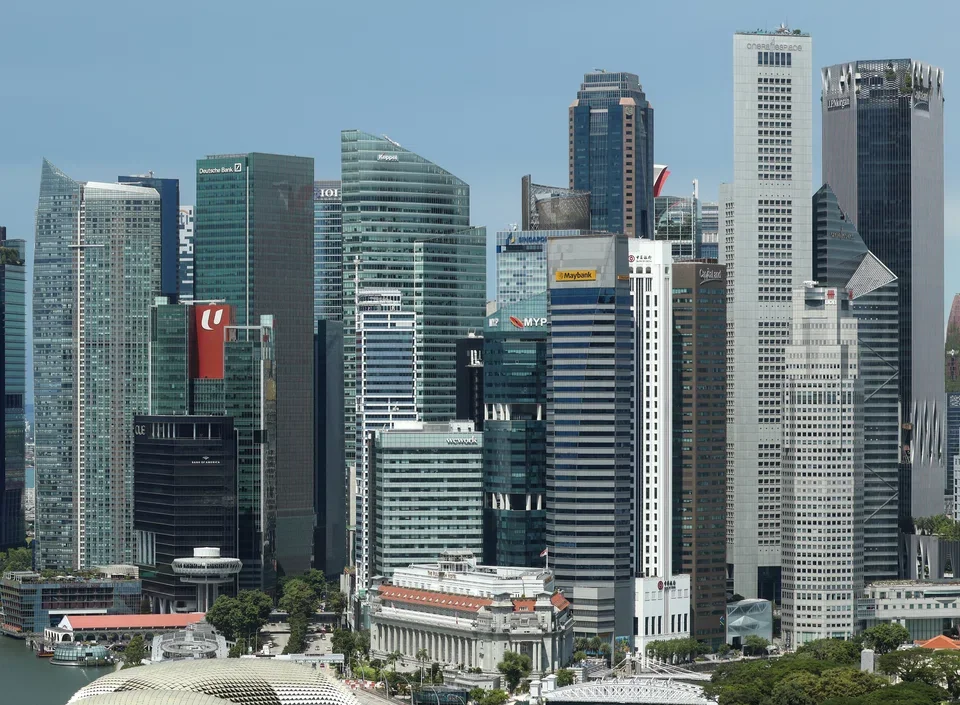
The value of Asean’s 500 leading brands rose 8 per cent to US$315.6 billion, according to the consultancy’s Asean 500 2026 report, published on Friday (Oct 30). Brand value estimates the economic worth attributed to a brand; it is distinct from a company’s market capitalisation or total valuation. The figures therefore offer a view of brand strength and perception, rather than a direct measure of a company’s financial performance.

Singapore’s lead spans sectors
Singapore’s position reaches beyond the top-ranked bank. OCBC and UOB each recorded gains, with their brand values rising 7 per cent and 10 per cent, respectively, to US$6.8 billion. Banking was Asean’s largest sector by brand value at US$105.9 billion, and banks occupied five of the region’s 10 leading places.

Other Singapore brands also advanced. Marina Bay Sands added US$2.1 billion in value, the largest absolute increase among the 500 brands. Its value rose 35 per cent to US$8 billion, lifting it from eighth to fourth in the regional ranking.

In aviation, Singapore Airlines remained the region’s most valuable airline brand. Its value rose 12 per cent to US$3.1 billion as the combined value of Asean airline brands increased 26 per cent to US$11.3 billion. Changi Airport’s brand value climbed 16 per cent to US$889 million. Ground handler Sats rose 15 per cent to US$790 million, while SIA Engineering gained 31 per cent to US$245 million.

Hospitality added another source of breadth. Millennium Hotels and Resorts was named Asean’s most valuable hotel brand, with its value up 25 per cent to US$526 million. Singapore accounted for seven of the 13 hotel brands in the ranking. Together, they were valued at US$1.1 billion, or 45 per cent of the sector total.

Brand Finance managing director for Asia-Pacific Alex Haigh said Singapore’s ranking reflected a broad base of companies. “Twenty-three of Asean’s 100 most valuable brands are Singaporean, more than from any other market, which shows that the country’s lead rests on depth rather than a handful of national champions,” he said.

Grab’s rise and the regional leaders
Grab’s value surged 53 per cent to US$1.7 billion in 2026, moving the Singapore-headquartered company from 69th to 41st place. Since 2023, its value has increased 441 per cent, the fastest growth in the region over that period. Brand Finance linked the rise to Grab’s expansion from ride-hailing and food delivery into financial services, including payments, lending and digital banking.

That expansion puts the company’s broadening service mix at the centre of its brand story. The ranking captures the value attributed to the Grab name across its activities; it does not, by itself, show how much each service contributes to revenue or profit. For investors and industry observers, the distinction matters: a fast-growing brand valuation points to rising brand strength, while the durability of that growth depends on the company’s ability to build recognition and use across its businesses.

Singapore-based TeleChoice International was named the region’s fastest-growing brand in 2026, with value up 288 per cent to US$53 million. The comparison with Grab highlights how growth rates and absolute brand values can tell different stories: a sharp percentage rise from a smaller base does not imply the same scale as a brand valued in the billions.
Malaysia’s Petronas stayed second despite a 4 per cent fall to US$13.8 billion. Brand Finance said lower energy prices were the main factor weighing on its brand value. Thailand’s PTT followed, down 5 per cent to US$8.7 billion. Vietnam’s Viettel slipped one position to fifth even as its value rose 7 per cent to US$7.9 billion.
Malaysia’s Genting entered the top 10, rising to ninth from 11th. The report pointed to lower economic risk and recovering tourism demand as support for the casino operator’s value. These movements show that rankings can shift with changes in sector conditions as well as with a company’s own brand activity.
Growth, strength and sustainability measures
Tourism demand also featured in the report’s regional findings. Vietnam’s Vietjet was identified as a brand to watch after its value more than doubled from 2025, rising 117 per cent to US$906 million. Singapore’s airline and hospitality gains formed part of a broader regional increase in travel-related brand values.
The strongest brands by Brand Finance’s Brand Strength Index weren’t necessarily those with the highest estimated value. Vietnam’s insurer Bao Viet took the top regional position on the index, which considers factors including brand perceptions and performance. Indonesia’s BCA ranked second, with the consultancy citing customer trust, financial quality and extensive market reach.
Petronas led Asean in sustainability perceptions value at US$1.3 billion. The measure estimates the portion of brand value associated with perceptions of sustainability; it does not represent a separate valuation of the company’s environmental performance.
The figures point to a region where banking remains the largest brand-value pool, while travel, hospitality and digital services are adding momentum. Singapore’s lead rests on companies spread across those sectors. The next rankings will show whether recent gains, particularly Grab’s expansion and the tourism-linked advances, translate into lasting brand strength.