Singapore Manufacturing Growth Slows to 51.4 as Regional Factory Trends Diverge
Singapore’s factory PMI eased to 51.4 in October, while AI-linked electronics orders remained firm and manufacturing trends varied across Asia.
Singapore’s manufacturing sector kept expanding in October, but the pace eased as growth slowed across several factory indicators. The overall purchasing managers’ index (PMI) fell 0.3 point from September to 51.4, extending the expansion streak to 15 months. A reading above 50 signals expansion; the October figure shows continued growth, not acceleration.

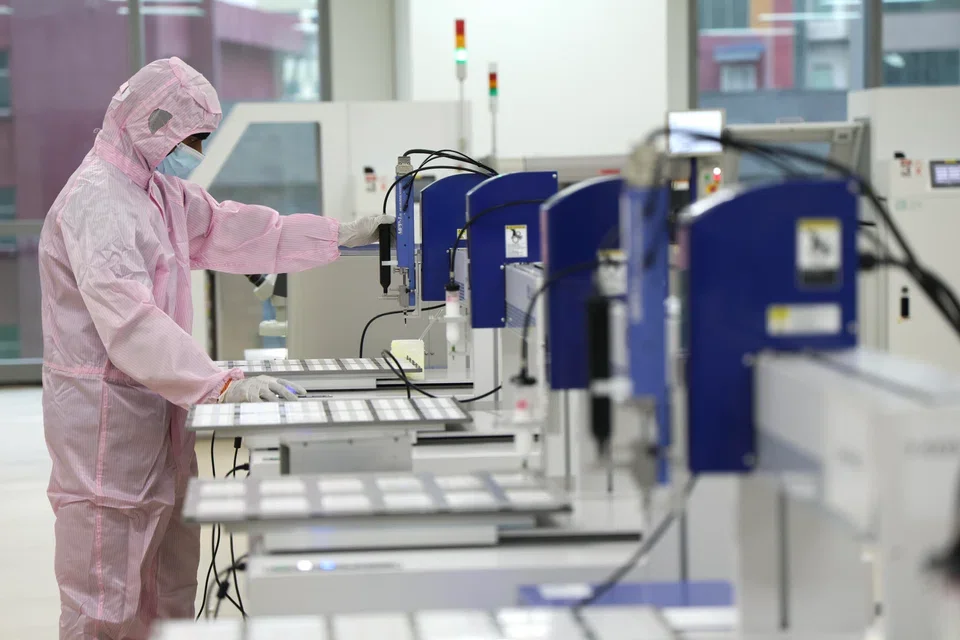
The electronics PMI, a key gauge for Singapore’s manufacturing base, slipped 0.4 point to 52.5. Strong demand tied to artificial intelligence (AI) hardware continues to support the sector, but the latest data point to a less rapid expansion than in September. The distinction matters: a sector can remain in growth territory even as new activity loses pace.
Orders remain a support, with costs and output a concern
Stephen Poh, executive director of the Singapore Institute of Purchasing and Materials Management (SIPMM), described the results as a sector “cooling from a high base, not losing momentum”. Electronics manufacturing has benefited from strong growth since the second half of 2025, driven largely by global demand linked to AI.

October’s softer overall PMI reflected slower growth in new orders, factory output, input inventories and employment. Imports and order backlogs also grew more slowly. By contrast, growth in new export orders and input prices picked up slightly. Finished goods inventories contracted at a slower pace, and the supplier deliveries index “contracted much more slowly”, a sign of fewer delivery delays.

For manufacturers, the combination presents a mixed operating picture. Slower growth in orders and output can indicate that activity is cooling, while easing delivery delays may help factories move work through production. Yet Poh said output still lagged orders and higher input costs remained a concern. If factories cannot convert order demand into production efficiently, strong bookings alone may not translate into an equivalent rise in output.

Poh also warned that renewed shipping disruption in the Middle East could constrain production. The PMI data show improvement in supplier deliveries, but that indicator describes conditions during the survey period; it does not remove the possibility that new transport delays could affect costs or delivery schedules.

Electronics export demand at a long-term high
DBS senior economist Chua Han Teng expects manufacturing to remain resilient in the near term. He pointed to the electronics new export orders index, which rose to 53.2 in October, its highest level since May 2018. Elevated order backlogs add to the evidence that demand for electronics goods remains strong.

Chua linked that strength to “strong external demand for AI-related hardware, supercharged by the ongoing AI infrastructure build-out”. The orders reading offers a measure of support for Singapore’s electronics outlook, even as the sector’s headline PMI eased. It also highlights why the headline and component indexes need to be read together: the overall measure slowed, but a specific export orders gauge reached a level not seen in more than eight years.

That demand carries uncertainty. OCBC chief economist Selena Ling expects manufacturing activity to keep expanding, while cautioning that this year’s exceptional performance should not be projected into 2027. “While there is a reasonable prospect of continued expansion, growth rates are likely to normalise into 2027,” she said.

Ling also cited investor concerns about whether companies can earn sufficient returns to justify heavy spending on AI. If the global investment build-out loses force, demand for related hardware could change. That uncertainty sits alongside current orders and backlogs: the data describe firm demand now, while the durability of the spending behind it remains an open question.

Asia’s factory data show different speeds
Singapore’s slowdown was part of a broader easing in some regional manufacturing measures, though October readings varied widely. Indonesia and Thailand recorded stronger growth, while expansion slowed in South Korea and Taiwan. Ling noted that manufacturing PMIs in mainland China, Taiwan and South Korea had also softened, making Singapore’s moderation less isolated.

China offered two different signals. Its official manufacturing PMI fell to 49.3 in October from 50.1 in September, moving into contraction for the third time in four months amid weak domestic demand and signs of softer exports. The private RatingDog China General Manufacturing PMI, compiled by S&P Global, edged down to 52 from 52.1 and remained in expansion for an 11th consecutive month.
RatingDog founder Yao Yu said Chinese factory output grew at its fastest pace since April, supported by strong demand and improved production capacity. New orders continued to rise, and export orders expanded for a fourth straight month, although at a slower pace. At the same time, business confidence fell to a nine-month low amid concerns about rising input costs and intensifying competition. The gap between the official and private readings underscores that surveys can capture different parts of a large manufacturing economy.
South Korea’s PMI declined to 51.3 from 53.9, its weakest improvement in manufacturing conditions since February. Taiwan’s reading eased to 54.9 from September’s more than five-year high of 56.7, but remained firmly in expansion for an 11th consecutive month.
Several South-east Asian economies moved the other way. Indonesia’s PMI increased to 54 from 52.4, its highest since March 2024. Thailand rose to 54.8 from 54.3, reaching its highest level since the end of 2025. Vietnam edged up to 52.3 from 51.9, extending its run of improving business conditions to 16 consecutive months. Malaysia returned to expansion at 51, up from 49.9, marking its strongest improvement since April.
For Singapore, the key signals to track are whether electronics export orders and backlogs continue to support production, and whether costs or shipping interruptions limit factories’ ability to fulfil demand. October’s figures show expansion holding across the sector, but also a cooling pace amid uneven conditions across Asia and uncertainty over how long the AI-related demand surge can sustain its exceptional momentum.