European Shares Slip 0.1% as Oil Falls and Investors Weigh AI Spending
The Stoxx 600 eased 0.1% as Brent fell 4.5%; investors weighed earnings, AI investment returns and a busy week for central banks.
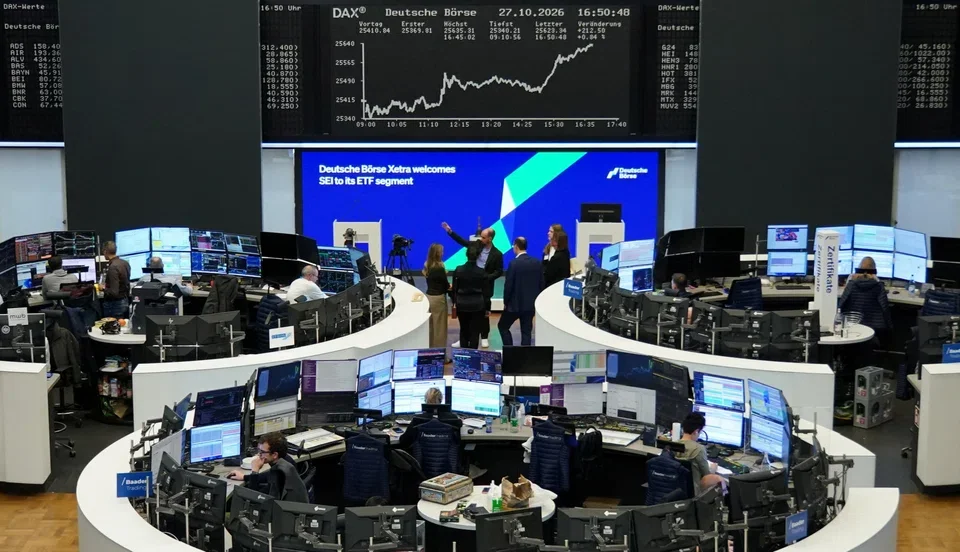
European shares edged lower on Monday as investors balanced a fall in oil prices against renewed questions about technology valuations, corporate earnings and the return on heavy artificial intelligence spending. The Stoxx 600 slipped 0.1%, while its technology sector rose 0.3%. The moves followed a sharp Friday sell-off in US technology shares and came ahead of results from Apple and several central bank decisions.
Brent crude futures dropped 4.5% to about US$108. The decline followed reports that Iranian negotiators had left talks with Qatari mediators and that a draft proposal was circulating, with another meeting possible. That prospect offered some relief to investors concerned about energy costs, though the negotiations and their outcome remained uncertain.

Oil prices matter to European and other energy-importing economies because a sustained rise can increase costs for businesses and households. The direction of crude prices also shaped currency trading: the euro and yen tend to face pressure when energy becomes more expensive. Monday’s drop therefore offered a counterweight to the cautious tone in equities, but it did little to settle concerns about economic growth or company earnings.
Technology losses set the backdrop
The broader market picture was mixed. MSCI’s main world stocks index was roughly unchanged. US stock futures rose, with Nasdaq futures up 0.73% and S&P 500 futures gaining 0.42%, after Friday’s declines. The S&P 500 fell 1.82% that day, while the Nasdaq dropped 2.86%.
Investors were looking to Apple for clues about consumer demand and the health of the technology trade. The company’s holiday-quarter outlook is a central point of attention, alongside what its chief executive says about AI and a revamped Siri. Higher memory chip costs are another concern: analysts expect them to weigh on quarterly profit growth, potentially bringing it to its weakest pace in six quarters.

The wider issue is whether rising spending on AI systems will produce returns that justify the sums involved. Goldman Sachs analysts expect capital spending by large cloud computing companies to nearly double to US$800 billion in 2026, then increase to US$1.2 trillion in 2027. At the same time, they see S&P 500 earnings per share growth slowing to 18% in 2027 from nearly 30% in 2026.

Those forecasts sharpen the divide between companies funding the build-out and those already turning demand into cash. “The next phase will be less about identifying who is exposed to AI and more about distinguishing who is already converting that demand into cash, who is still funding the build-out, and what valuation investors are being asked to pay for each,” said Kristofer Barrett, head of global equities at Carmignac.

That distinction matters well beyond technology shares. Heavy investment can support suppliers and infrastructure businesses, while also putting pressure on cash flows when revenue takes longer to arrive. Investors will be watching company results for evidence that spending is translating into sales and profits, rather than relying on investment plans alone.

European concerns remain distinct
Europe’s market has its own sources of strain. Eurozone bonds eased slightly after a rally the previous week, while investors remained uneasy about France’s fiscal outlook and continuing street unrest. Bank of America’s Sebastian Raedler said the prospect of further weakness in euro area purchasing managers’ index readings was weighing on his Stoxx 600 outlook.

Raedler also pointed to the possibility that returns from AI investment disappoint if models become more alike and companies struggle to maintain lasting advantages. “The main reason for our caution on European equities is the risk of disappointment in the AI capex cycle as AI models commoditise and competitive moats prove limited,” he wrote.
Barclays strategist Emmanuel Cau highlighted another tension: companies face both weaker cash flows and rising commitments to invest. He said that debate over whether AI returns can ultimately support the scale of spending may remain unresolved for some time. For European shares, that leaves investors weighing the potential benefits of new technology against uncertain demand and the cost of financing expansion.
Currency moves and a crowded calendar
Foreign exchange trading was subdued. The euro rose 0.46% to US$1.1199, while the dollar gained 0.16% to 157.90 yen. Investors were also questioning whether the dollar would retain its usual appeal during market stress. George Saravelos, Deutsche Bank’s global head of foreign exchange strategy, said the US reliance on overseas equity inflows was historically unprecedented. He added that when a share-market shock originates in the US, the usual relationship between the dollar and equities can change direction.
The coming days bring fresh tests for that cautious mood. Investors are assessing recent decisions from the US Federal Reserve and European Central Bank, alongside results season and the possibility that policy expectations shift as new information arrives. Markets were pricing in rate increases from the Reserve Bank of Australia, Bank of England and Riksbank, while the Norges Bank was expected to hold rates steady.
Among scheduled economic releases, the US ISM manufacturing survey for October was due later Monday, followed by the closely watched non-farm payrolls report on Friday. Those readings could shape expectations for growth and borrowing costs. For now, the clearest signals to watch are whether oil’s retreat holds, whether earnings confirm the scale of technology investment, and whether companies can show that AI demand is becoming cash flow.