Kathryn Turner’s TikTok Following Boosts M&S Food as Clothing Recovery Lags
Turner’s online following is drawing attention to M&S food launches, while clothing and home continue to face a slower recovery.
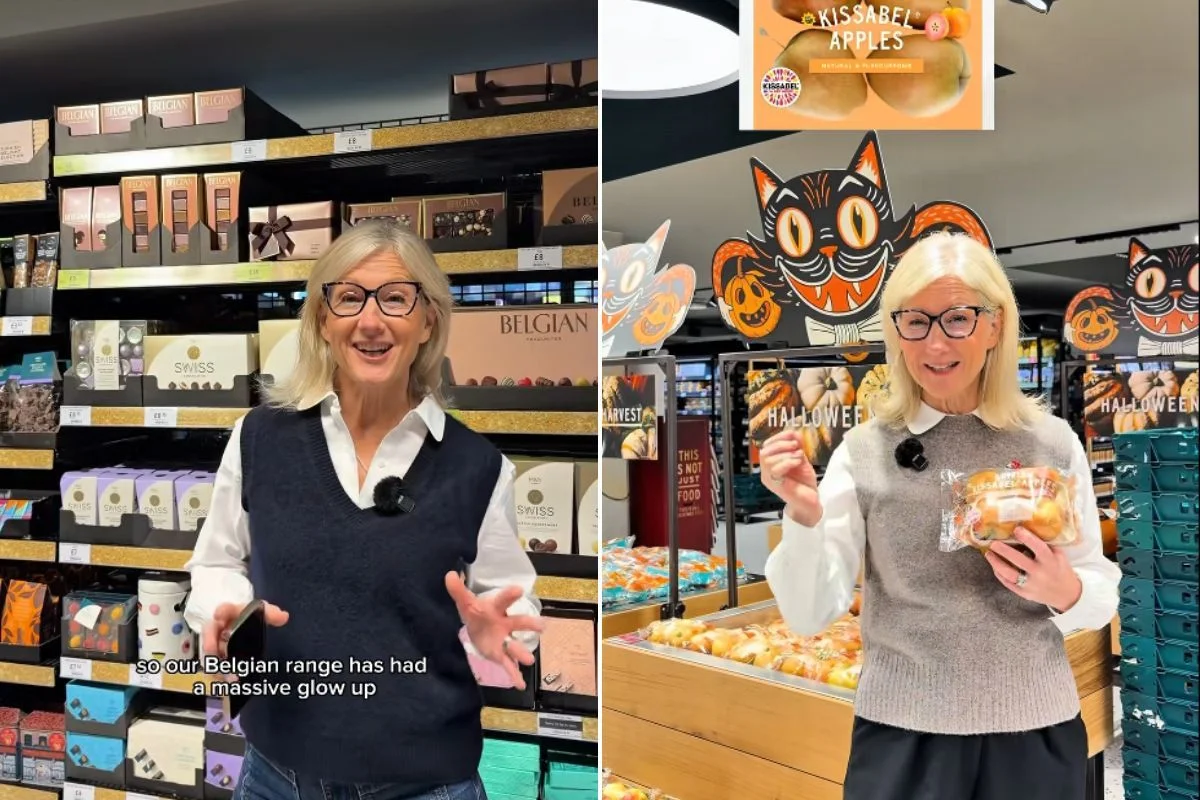
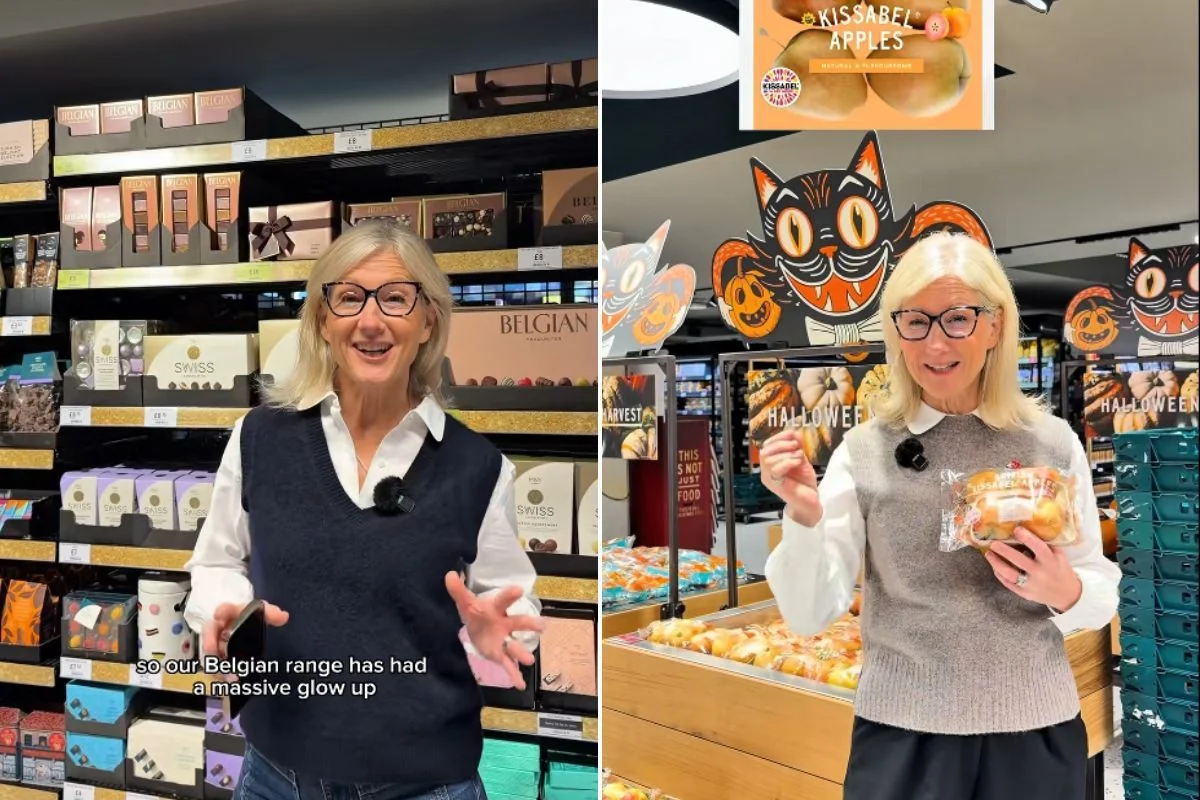
Kathryn Turner has become an unusually visible face of Marks & Spencer’s food business, with a social media following larger than the retailer’s own M&S Food account. The attention comes as the grocer gains shoppers and market share, but it doesn’t resolve the wider question facing M&S: whether the same appeal can help its clothing and home operations recover.
Turner, the retailer’s director of product development, has drawn viewers by introducing new food products, from candyfloss-flavoured grapes to chocolate and pistachio sandwiches. Since relaunching her social media profiles in May, she has attracted 281,000 followers on Instagram and 319,000 on TikTok. The official M&S Food channel has 270,000 followers on TikTok.
Her popularity has spilled beyond the screen. Turner’s white shirt, blue sweater vest and blonde wig were widely adopted as a Halloween costume, and her fans include Nigella Lawson and Ian Wright. The attention has made a product development executive, rather than a traditional celebrity spokesperson, a recognisable figure for shoppers.
There’s a longer history behind her food credentials. Turner has worked at M&S since 1995, and Tubby Toast, a product inspired by the children’s programme Teletubbies, was her first breakthrough creation. It reached shelves in 1998. Her current online presence puts that product work in front of a much wider audience, giving viewers a personal route into the retailer’s latest launches.
M&S has also encouraged other employees to build their own audiences. The company says staff run about 600 Facebook pages and 100 TikTok accounts that give viewers an inside look at its products. Turner’s reach is exceptional, but her profile sits within a broader effort to make employees part of how the retailer presents its ranges online.
Food sales show momentum
The commercial evidence is strongest in food. Sales rose 10.7 per cent in the four weeks to October, according to the latest NIQ data. NIQ linked the retailer’s performance to growing interest in product launches on social media, saying Turner’s TikTok presence was helping turn attention into shopper demand.
Independent retail analyst Richard Hyman described Turner’s profile as “clearly a very successful” effort for the company. He said M&S Food was “performing very strongly and gaining market share,” while cautioning that online popularity and commercial progress shouldn’t be treated as the same thing. In his view, Turner’s visibility has contributed to the food business’s performance, but it’s one influence among several.
That distinction matters for judging the value of the attention. A popular product video can put a launch in front of potential customers, but sales figures cover the results of a wider retail operation. The available data points to both rising food sales and online interest; it doesn’t isolate how much of the growth Turner generated. The more durable measure will be whether interest in new products translates into continued demand.
Clothing faces a different test
M&S has been trying to broaden its appeal to younger customers. In 2023, it hired Maddy Evans, formerly of Topshop, and has used collaborations with figures such as Amelia Dimoldenberg to put its clothing in front of a younger audience. At the company’s annual general meeting this summer, chief executive Stuart Machin said it had successfully “dumped the frump”.
The retailer marked its 100th anniversary in July with a catwalk show at London Fashion Week, another sign of its effort to refresh how shoppers see the brand. Yet Machin has also stressed the importance of its established customer base: middle-class families have long supported M&S. He said his mother had warned that the clothes risked becoming “too skimpy”. That balancing act leaves the clothing business needing to attract younger shoppers without losing the customers who already buy from it.
Hyman said Turner’s impact is concentrated in food, while clothing and home are “finding life more challenging”. The difference shows why a prominent online personality can’t, on her own, demonstrate that every part of a retailer is regaining momentum. Product discovery may be working particularly well for food, where new launches give viewers something specific to see and discuss. Clothing and home still have to show that their ranges and availability are meeting customers’ needs.
The non-food business also faced disruption after a cyber attack in April last year. The incident knocked £131m from the company’s balance sheet. In the year to March, sales in food, home and beauty fell by 7.7 per cent, while food sales rose by seven per cent. M&S told shareholders in May that the non-food business had been hit harder by a “temporary pause in online trading and systems access”, which disrupted stock flow and restricted availability.
Analysts have since described the retailer’s recovery from the attack as solid, and its share price has gained nearly 30 per cent in the last six months. Those developments give the company a stronger starting point, but they don’t erase the gap between food and non-food performance. The next measure of progress is whether clothing and home can improve as stock flow and customer access recover, while food sustains its growth. Turner has helped make M&S’s new products visible; the broader test is whether that attention accompanies improvement across the rest of the business.