China Stock Support Measures Target Liquidity and Share Buybacks
China’s central bank is expanding liquidity tools and lowering buyback financing costs after the CSI300’s worst month since early 2016.
China’s latest stock market support effort focuses on liquidity and company share purchases, as a steep October decline puts investor confidence under pressure. The central bank says its swap operations could channel more than 100 billion yuan (US$15 billion) into the market, while a longer term lending scheme will make financing share buybacks and purchases cheaper.
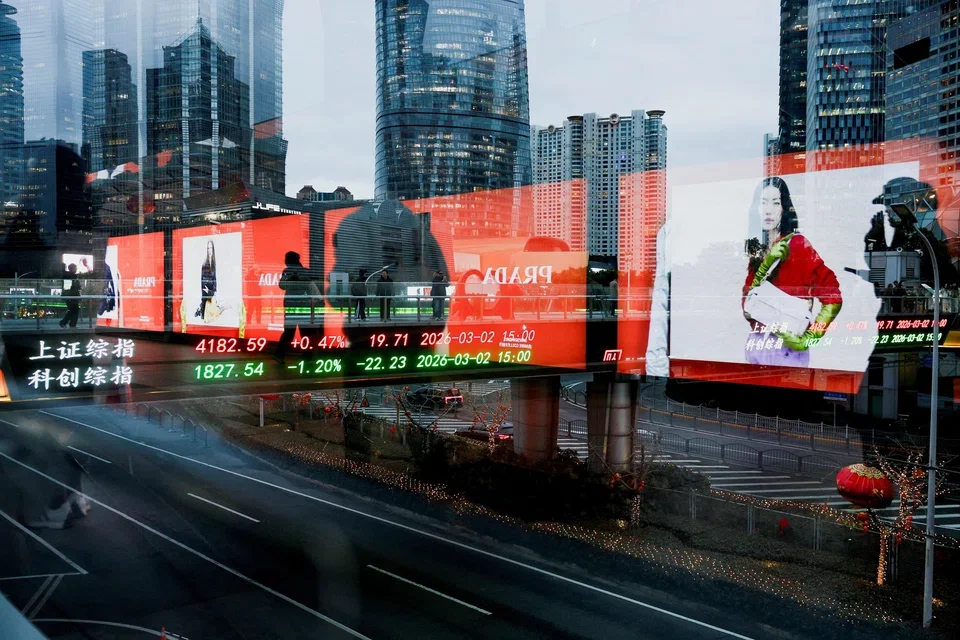
The timing reflects the scale of the recent slide: the CSI300 fell 8.5 per cent in October, its worst monthly performance since early 2016. The Shanghai Composite Index then rose 1.1 per cent on Monday, its largest one day percentage gain since Aug 27, as investors anticipated supportive measures. That rebound followed reports that financial institutions had met with regulators to discuss ways to support capital markets.

Those gains offer evidence of an immediate change in sentiment, but they don’t establish that the underlying pressures have eased. Persistent weakness in the world’s second largest economy, sluggish consumption, a prolonged property sector debt crisis and sharp declines in technology shares have all weighed on confidence. The measures address market funding and buying activity; the source does not report a change in those broader conditions.
Swap facility offers a route to market liquidity
The People’s Bank of China (PBOC) said it would conduct another round of swaps with financial institutions on Tuesday. Bidding will take place under the Securities, Funds and Insurance Companies Swap Facility (SFISF), a tool created two years ago to help brokers, insurers and fund companies obtain liquidity for stock purchases.

Thirty-one brokers and fund companies had already applied for swaps worth more than 100 billion yuan, the PBOC said. The stated potential injection is more than 100 billion yuan, or US$15 billion. That is the scale of the applications and prospective support described by the central bank; the source does not say how much each institution will receive or how much will ultimately be used to purchase shares.

This will be the third time the PBOC has used the facility. Its previous operations took place in October 2024 and January 2025, injecting a combined 105 billion yuan into the market. That history gives investors a point of comparison, though the available figures do not show how much of the earlier funding translated into sustained demand or lasting price gains.

Cheaper financing puts buybacks in focus
The PBOC is also changing the status and price of a separate re-lending scheme designed to fund share buybacks and purchases. It will move from a temporary arrangement to a long term mechanism, and the interest rate on the expanded scheme has been cut to 1 per cent from 1.25 per cent previously.

A lower borrowing cost can make financing purchases more attractive to eligible participants. The shift to a long term mechanism also gives listed companies and other participants a more durable source of financing than a temporary arrangement. Still, the source provides no estimate of the amount companies may borrow, the volume of shares they may buy or the pace at which the scheme will be used. Its effect on demand will depend on participation and actual purchases.

The China Securities Regulatory Commission urged major index constituents and leading technology companies to “actively buy back shares” and stabilise their market value. It also plans to prod some newly established exchange traded funds to build stock positions faster and encourage fund managers to buy shares during a down cycle. These requests put large companies and fund managers at the centre of the effort, but they do not guarantee that those groups will buy at a particular scale or that prices will hold.
Confidence remains tied to wider pressures
Hao Zhou, a Hong Kong based analyst at Guotai Haitong Securities, said the new swap round “sends another strong signal of policymakers’ commitment to safeguarding capital market stability and supporting investor confidence”. He added that global volatility and external uncertainties continued to weigh on investor sentiment.
For shareholders, the measures may support near term demand if institutions and companies follow through on purchases. For listed companies, the lower rate could reduce the cost of financing buybacks. Fund managers and newly established exchange traded funds may also face pressure to increase their market exposure. The source does not specify which companies or funds will act, or how much buying may result.
The next useful indicators are therefore participation and execution: the volume of swaps completed, the use of the re-lending scheme, and whether companies and funds actually make purchases. The previous two swap rounds supplied a combined 105 billion yuan, while the new round has attracted applications worth more than 100 billion yuan. Whether this support can change the market’s direction will also depend on the economic and sector pressures that have been eroding confidence.