Iran Calls Qatar’s Latest Peace Draft Unacceptable as Gulf Shipping Risks Persist
Tehran disputes whether Qatar’s draft is a genuine offer, while Houthi attacks raise fresh concerns about oil supply and key shipping routes.
The gap between Qatar’s proposed path to end the eight-month conflict and Iran’s stated conditions remains the central obstacle to a deal. A senior Iranian official described Doha’s latest proposals as unacceptable ideas rather than an offer, even as a source briefed on the talks said Tehran was reviewing a new draft.
That disagreement matters beyond the negotiating table. The conflict has disrupted shipping and oil supplies, and attacks involving Yemen’s Houthis have added pressure around two important maritime routes. For energy markets and shippers, a diplomatic timetable offers little certainty while the parties disagree over what must happen first.

A seven-day framework, with conditions still in dispute
Qatari mediators presented a draft on Sunday, Oct 25, according to a source briefed on the negotiations. The source said Tehran was considering it and might respond by the end of the week. The proposal sets out a seven-day sequence of confidence-building steps intended to address concerns from both Tehran and Washington. It could begin early the following week, with several countries acting as guarantors, the source said.
Iran’s account of the exchange was markedly different. A senior Iranian official involved in the talks said the material from Qatar did not amount to a formal offer and called the ideas unacceptable. The official also said Tehran’s position on the nuclear issue had not changed: Iran would show no flexibility on it.
Foreign Minister Abbas Araqchi said Iran remained in close contact with intermediaries as it reviewed ideas that might support implementation of Tehran’s own seven-day plan. He said that plan could be carried out in less than a week and that Iran was continuing to give diplomacy a chance.
The two sides also differ on the order of negotiations. Washington wants Iran’s decades-long nuclear programme included from the outset. Tehran says its conditions must come first, including an end to the US blockade of Iranian ports and the lifting of restrictions on Iranian oil exports. Iran rejects Western concerns that its nuclear programme is intended for military use.

The latest draft is reportedly distinct from Iran’s proposal, which Tehran presented in late September. Under that earlier plan, Araqchi said the Strait of Hormuz could reopen if certain conditions were met. US President Donald Trump rejected the proposal, after which Qatar pursued further mediation. The details of the newer draft have not been made public, leaving its practical terms and the distance between the two positions unclear.
Qatar and Pakistan have led mediation efforts. Earlier talks helped produce an interim agreement in June, but it soon unravelled. That history gives the current timetable a clear test: whether both sides will take the specified steps, and whether the arrangements can hold beyond an initial pause.

Attacks add pressure to oil and shipping routes
Separately, a Saudi-led coalition said it destroyed a ballistic missile launched by Yemen’s Houthis toward Saudi Arabia’s eastern region early on Thursday. Saudi civil defence issued alerts for possible danger in Najran, in the southwest, and in the Eastern Province, then said the danger had passed in both areas.
The reported launch follows repeated Houthi attacks on Saudi Arabia in recent weeks. The group’s activity has opened another front in the conflict, while fighting intensified in September as Houthi forces advanced against Saudi-backed forces toward the Bab el-Mandeb Strait. The strait is a major shipping passage on the opposite side of the Arabian Peninsula from Hormuz.

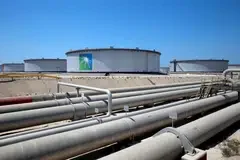
Oil prices rose more than 1 per cent to more than US$115 per barrel on Wednesday after an attack claimed by the Houthis on Ras Tanura, Saudi Arabia’s largest oil refinery. The reported price move reflects concern about potential supply disruption; it does not establish how much oil, if any, was lost. Saudi authorities had not immediately confirmed the refinery attack, according to a related report.
For buyers, producers and shipping companies, the risk is cumulative. Hormuz and Bab el-Mandeb sit on different routes, but disruption around either can complicate the movement of energy and other cargo. The source reports repeated attacks and rising concern about supply, but offers no estimate of the duration or scale of any interruption. Those details will shape how much the security risk affects actual flows.
Mediation faces a fragile security backdrop
The source briefed on the talks said concerns about renewed Israeli attacks were present before the Sunday meeting in Tehran. Trump repeated threats on Friday to strike Iran again. Iranian security officials, meanwhile, told Reuters that Tehran had prepared plans to target undersea cables in the Gulf if the US and Israel resumed attacks.
On Monday, senior figures from Saudi Arabia, Turkey and Pakistan met Iranian officials in Tehran as part of efforts to reduce tensions. Qatar said on Tuesday that Iran should stop threatening Arab Gulf states and reopen Hormuz to demonstrate good faith in the mediation process. Gulf states had faced sustained bombardment earlier in the conflict, and fighting also reignited between Israel and the Iran-backed Lebanese armed group Hizbollah.
The immediate question is whether Tehran will respond to Qatar’s draft and whether the parties can agree on the sequence of concessions. Until those points are clearer, the seven-day framework remains a proposal under review, while attacks near energy infrastructure and shipping lanes keep supply concerns in view.


