Singapore Must Anchor Deeper Operations to Compete for Global Capital
Tax incentives still matter, but companies increasingly weigh stability, talent and substantive operations when choosing where to place capital and senior functions.
Singapore’s next phase of attracting global capital depends on securing more than offices and relocations. Companies are looking for substantive operations, senior decision-makers and investment expertise, a shift that raises the bar for a city-state whose reputation and tax incentives have helped draw international businesses.
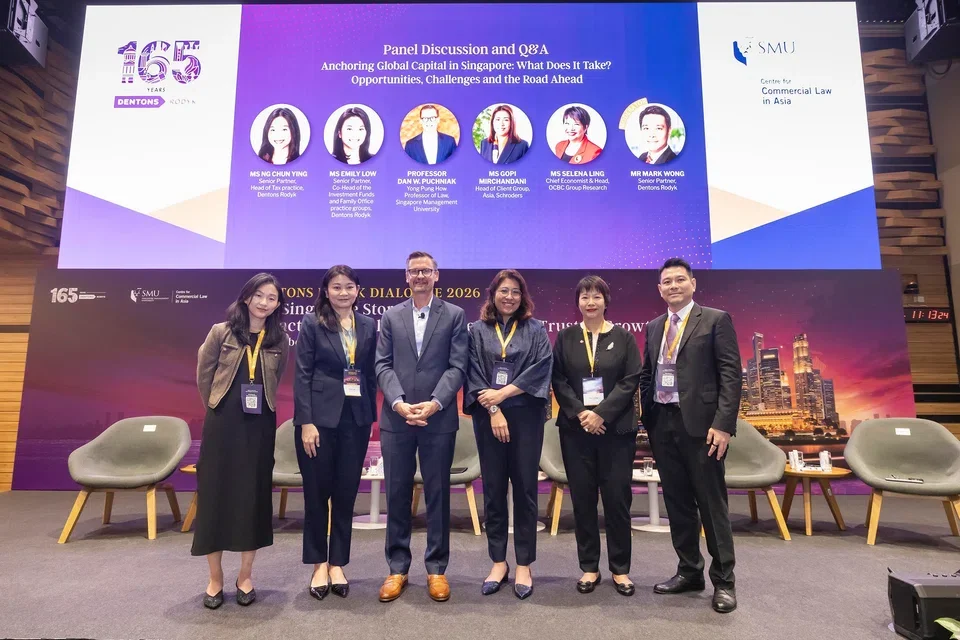
That was the central message from panellists at the Dentons Rodyk Dialogue 2026, held on Wednesday, Oct 28, at Singapore Management University’s Yong Pung How School of Law. Gopi Mirchandani, Schroders’ head of client group for Asia, said the “low-hanging fruit” of attracting capital and talent is gone. Simply placing people or establishing an office in Singapore no longer makes the case.

The competition now turns on whether businesses can build high-value functions and lasting capabilities in the country. For Singapore, that means connecting incoming capital with treasury and corporate functions, management decisions, investment expertise and skilled employees. The attraction is less a single incentive than the wider operating environment companies need to commit those activities.
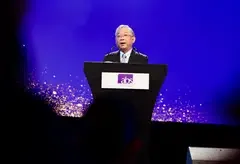
Trust needs to be maintained
Singapore’s rule of law, stability, predictability and talent pool remain central to its appeal, Mirchandani said, with tax incentives still part of the offer. OCBC chief economist Selena Ling cautioned, however, that the country cannot assume it will retain its safe-haven standing as geopolitical uncertainty persists.

“Does it mean that we will always enjoy this trust or safe-haven status going forward? I would say, don’t count the chickens before they hatch. You actually have to work very, very hard at it,” Ling said.

Her point was that capital attraction involves several connected flows: portfolio investment, wealth and management activity, and foreign direct investment. The strongest presence comes when those flows are accompanied by the people and functions that support them. That broader base can give Singapore a more durable role in companies’ regional operations than a narrow focus on incorporation or tax treatment.
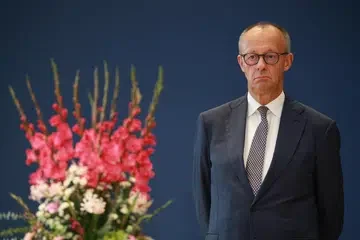
Incorporating locally also does not insulate a company from scrutiny elsewhere. Dan W Puchniak, a professor at SMU’s Yong Pung How School of Law, cited TikTok and Shein as examples of businesses whose supply chains, ownership structures and data-storage locations can draw attention across borders. For companies choosing where to locate key functions, the practical test increasingly extends beyond the place of incorporation.

Tax certainty and operating support
Tax incentives can help shape location decisions, but panellists said they are often not the deciding factor. Ng Chun Ying, Dentons Rodyk’s senior partner and head of tax practice, said large corporations have largely accepted that they must pay a minimum level of tax somewhere. Their focus has shifted towards tax certainty, fewer disputes and limiting the risk of being taxed twice.

That change matters for Singapore because Malaysia and Thailand offer lower costs and have introduced incentives of their own. A company comparing locations may therefore weigh not just the headline tax offer, but also predictability, the ability to carry out substantial work locally and the risk of disputes across jurisdictions.

Ng said the introduction of the Global Minimum Tax has shifted competition from tax rates towards fiscal support. The measure sets a tax rate of up to 15 per cent for corporations with annual revenues of at least 750 million euros (US$835.5 million). She pointed to Singapore’s expenditure-based Refundable Investment Credit scheme and said the country’s fiscal strength positions it to provide this kind of support.
The distinction is consequential: as tax-rate advantages narrow for large companies, support tied to expenditure can become part of the contest for business activity. The article’s discussion did not specify which types of projects will benefit most, so the scheme’s practical effect will depend on how companies assess eligible spending alongside other operating costs and location needs.
Building fund-management depth
Singapore’s variable capital company, or VCC, structure offers another way to draw investment activity. Designed to house funds across a range of assets, it lets managers set up segregated funds for private investments or manage individual sub-funds for clients. Wealthy individuals and family offices have been among its users.
Emily Low, Dentons Rodyk’s senior partner and co-head of its investment funds and family office practice groups, said VCCs can only be managed by fund managers based in Singapore. In her view, that requirement has helped create “more substantive” fund management in the country. The structure can bring activity and expertise alongside the capital itself.
But establishing the structure is only part of the work. Low said Singapore needs to deepen its fund-management capabilities and strengthen governance standards. Those goals point to a longer-term test: whether the country can build a stronger base of managers and sound practices as the use of VCCs becomes established.
The benefits of attracting global capital reach beyond large international companies. Ling said small and medium-sized enterprises remain connected to the health of multinational corporations and the global economy. “SMEs are still very much tied to the health of the MNCs (multinational corporations) and the global economy, so I don’t think we can draw a separate line. We just have to look a lot harder at things that we didn’t look at in the past.”
Singapore’s appeal, then, rests on whether it can keep trust, talent and operating depth in step with its financial structures and fiscal support. The next measure of success is likely to be the extent to which global firms place decision-making and lasting expertise in the country, and whether domestic businesses share in the activity those functions generate.