Warsh’s Rate Hold Signals Patience as AI Investment Broadens
The Fed kept rates at 3.75 to 4 per cent as Warsh pointed to tighter financial conditions, AI-driven productivity and stubborn inflation risks.
The Federal Reserve’s decision to keep its policy rate unchanged left investors weighing two competing signals: chair Kevin Warsh’s confidence in the economy and the possibility that inflation will require further restraint. The Fed held its rate in a range of 3.75 to 4 per cent on Wednesday, Oct 28, with two of the 12 rate-setting committee voters dissenting in favour of an increase.
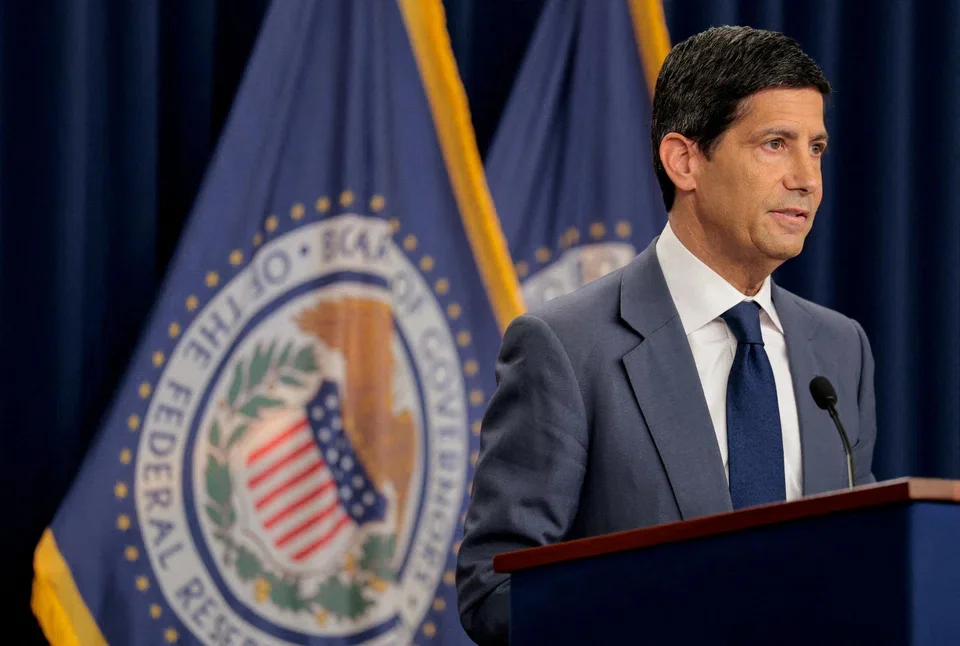
Markets initially treated the split decision as a hint that an increase could still come in December. Short-term Treasury yields edged higher after the decision, then fell during Warsh’s press conference. Stocks rose modestly, while longer-term Treasury yields moved up. Those divergent reactions suggest investors heard a more relaxed near-term message from Warsh but remained alert to inflation and borrowing-cost risks over a longer horizon.
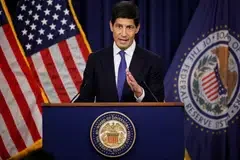
Warsh’s case for waiting rested on three points identified by Standard Chartered Global Research strategists. He gave little attention to recent high inflation readings, instead stressing longer-term trends. He also argued that the previous rate increase had already tightened financial conditions. And he pointed to the sensitivity of artificial intelligence investment to interest rates as evidence that policy restraint was reaching the economy.
What the hold means for policy
The September increase, in Warsh’s account, had helped make consumers and businesses more cautious. He cited weakness in housing and volatility in technology-related corporate credit as signs that tighter conditions were taking effect. “Market participants are somewhat more discerning (about which companies, securities or properties they invest in),” he said.

That argument puts the focus on how quickly higher borrowing costs affect spending and investment. A rate increase can take time to work through the economy; if activity is already cooling in interest-sensitive areas, policymakers may see a reason to wait for more evidence before tightening again. The other side of that calculation is that a pause could leave inflation pressure in place if price increases prove more persistent than expected.

Warsh also played down the risk that rising oil costs would feed through broadly into prices. Standard Chartered’s strategists contrasted his stance with that of the Bank of Canada, which raised rates on the same Wednesday. Their account was that Warsh saw less cause for concern about companies passing higher costs on to customers.
For borrowers, the distinction between short-term policy rates and longer-term yields matters. The Fed’s rate directly influences some short-term borrowing costs, while mortgage and other longer-duration rates also respond to bond-market expectations. The rise in long-term yields after Warsh spoke shows that confidence in a patient near-term approach did not settle every concern about future inflation.

AI investment and the growth outlook
Warsh described the US economy in positive terms despite the uncertainty around prices. He said the labour market appeared to be regaining momentum and that strong business investment was spreading beyond data centre construction. The scale and durability of that broader investment were not quantified in the account, leaving its reach an open question for companies and markets watching the AI build-out.
He rejected the view that enthusiasm for AI was necessarily overheating economic activity. Instead, he pointed to the prospect that time-saving tools could lift productivity, allowing output to grow faster without adding equivalent inflation pressure. That is a hopeful explanation for how an investment boom might coexist with price stability, but its effects depend on whether productivity gains spread across businesses and translate into sustained efficiency.
The Fed is monitoring AI’s economic effects and plans to hold a summit on the subject in San Francisco. For employers and workers, the implications may be uneven: the technology could change how companies organize work even as its economy-wide impact remains uncertain. Warsh suggested that fears about job losses and inflation may be overstated, while acknowledging that the evidence is still developing.
His confidence sits alongside a difficult inflation record. Warsh acknowledged that the Fed had failed for six years to bring inflation back to its 2 per cent target, a prolonged stretch of price increases that has frustrated Americans. He said inflation expectations remained anchored. That distinction matters to policymakers: expectations that stay contained can make it easier to bring inflation down, but they do not establish that current price pressure has eased enough.
A different meeting schedule
The Fed’s calendar will change in 2027. It will hold nine rate-setting meetings, rather than the usual 10, while the board will still meet 10 times. Warsh said the additional session would be devoted to long-term strategy and economic trends, rather than a short-term policy decision. The change creates a dedicated opportunity for broader discussion without adding another scheduled rate decision.
Investors will have to interpret that format alongside the economic data and the Fed’s decisions at its other meetings. The reduced number of rate-setting occasions changes the timetable for policy choices, but the account provides no indication that it changes the committee’s inflation target or its stated approach to assessing conditions.
Bond markets keep the inflation question open
Long-term yields rose even as stocks advanced modestly. The increase in the 30-year bond yield raised the possibility that investors were demanding more compensation for inflation risk. Higher long-term yields can feed into mortgage and other loan costs, so this part of the market’s response may matter to households and businesses even when the Fed leaves its short-term rate unchanged.
Oil futures also reached six-month highs on Wednesday amid reports of potential escalation in the region. The source described oil prices as having nearly doubled from pre-conflict levels, with diesel futures near record highs across much of the US. Since fuel affects the cost of transporting goods, sustained increases could complicate the Fed’s effort to bring inflation back to target. The scale and duration of any further price effects remain uncertain.
Market watcher Felix Nikolas Prehn argued in his Capital Flows newsletter that the Fed was underestimating inflation by holding rates. He called the decision a “passive stance” and said the risk was being underestimated by market positioning. His view captures the criticism facing Warsh’s approach: if price pressure persists, the pause could look premature. If financial conditions continue to tighten and productivity gains spread, the case for waiting may strengthen. The next test is whether incoming evidence supports Warsh’s confidence without allowing inflation expectations to drift.


