NCS Plans to Expand AI Specialist Team to More Than 300 in Two Years
NCS aims to grow its AI specialist team from 100 to more than 300, while training staff and developing applications across three industries.
NCS’s plan to more than triple its AI specialist workforce puts delivery capacity at the centre of its expansion: the company wants to grow from 100 Intelligentisation Forward-Deployed Engineers, or iFDEs, to more than 300 within two years. The target combines external hiring with reskilling existing employees, though NCS hasn’t said how many roles will come from each route.

The Singapore-based technology services company announced the target on Thursday, Oct 29, alongside the launch of its AI Mission Centre. The centre is intended to help businesses and public-sector organisations put AI to work at scale. NCS chief executive Sam Liew said the company wants AI to strengthen industries and improve public services in Singapore.

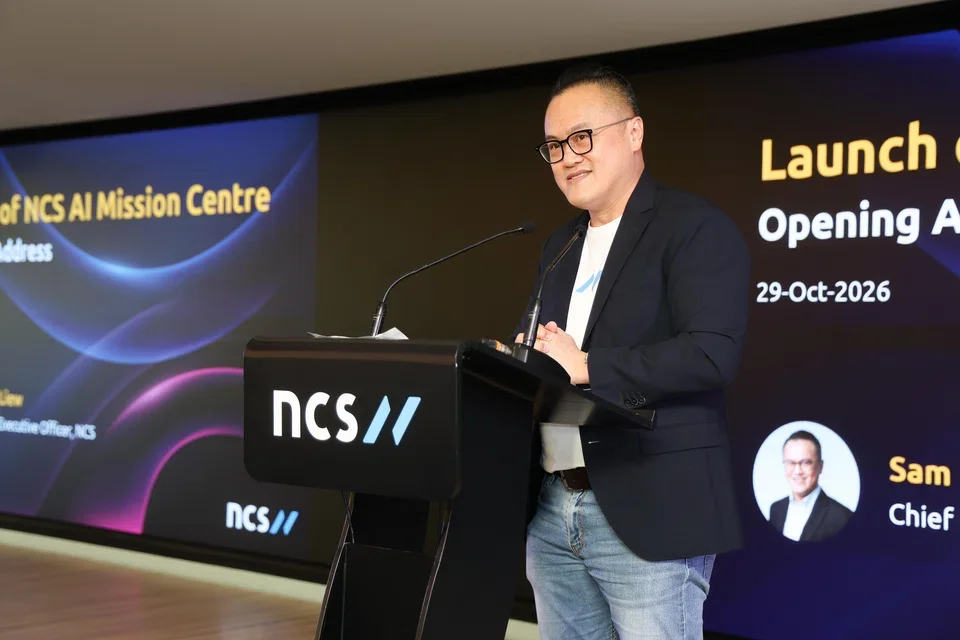
“By growing our current team of 100 iFDEs to more than 300, we are investing in our greatest asset – our people – who can turn technological breakthroughs into everyday progress,” Liew said.

Building capacity across the workforce
The size of the planned expansion is clear; its staffing mix is not. Hiring experienced specialists can add skills quickly, while reskilling gives current employees a route into work that requires AI expertise. NCS plans to use both, but hasn’t disclosed the split or set out a more detailed timetable for bringing the additional specialists on board.

The iFDE role is designed around direct client work: specialists help customers develop AI applications and put them into use. That focus matters because a larger pool of technical talent only translates into more delivery capacity if projects can move from development into day-to-day operations. NCS’s stated aim is to build a team that can do that implementation work alongside clients.

The company is also extending AI training beyond the specialist group. It says every employee will receive AI fluency training, covering prompt engineering, responsible use of the technology and work with AI agents. These topics span both practical skills and the choices employees make when using AI in their jobs.

More than 2,000 AI practitioners are being upskilled in developing and deploying production-ready agentic solutions. NCS has also said it is redesigning software engineering roles to bring business analysis, development and testing capabilities together. The changes point to a broader effort to combine technical work with the stages needed to shape and deliver a working product.

For early-career candidates, training programmes will give university, polytechnic and Institute of Technical Education graduates paths to build practical AI skills. Some options will be available without employment bonds. That detail gives graduates a way to access training without a required period of service, though NCS hasn’t specified how many places the programmes will offer.

Applications planned in three industries
NCS signed three memorandums of understanding with Changi Airport Group, the Institute of Mental Health (IMH) and Life3 Biotech. The intended applications cover aviation, healthcare and biomanufacturing, giving the company projects across industries with different operational needs.
With Changi Airport Group, NCS will work to enhance and scale an AI-powered runway surveillance system that detects foreign object debris. The stated task is both to improve the system and extend its use. NCS hasn’t shared further details about the planned work, such as the deployment schedule or the system’s current operating scope.
The work with IMH will explore digital tools to support patient care. One proposed application is an AI-powered facial-recognition system intended to strengthen patient identification and safety monitoring in inpatient wards. That description sets out the intended use, but the source provides no information about how the system will be assessed or when it might be introduced.
Life3 Biotech’s work with NCS will focus on applying AI to improve the efficiency, scalability and sustainability of biomanufacturing processes. Those are the project’s stated goals; no specific targets or measures have been provided. The practical results will depend on how the tools perform in production settings and whether they can be adopted within existing processes.
Delivery will test the expansion
The workforce goal and the industry projects are linked: NCS is seeking more specialists while putting forward applications where AI would be used in operational settings. The announced plans establish a direction, but leave open questions about hiring, training pace and the progress of each application. How many of the 300-plus specialists are newly hired, and how the projects perform once developed, will help show whether the planned capacity translates into sustained client work.
NCS has also not provided project-level milestones or quantified outcomes for the three industry applications. For now, the clearest measures are the workforce target, the existing 100 iFDEs, and the more than 2,000 practitioners undergoing further training. Those figures describe the scale of the effort; delivery across the three sectors will show how much of it reaches practical use.