Google expands Singapore healthcare AI work with NHG Health programme and research hub
Google’s Singapore plans pair population health forecasting with clinical AI evaluation, while a new research hub connects local institutions with global teams.
Google’s Singapore healthcare plans bring together two distinct priorities: using data to identify health risks earlier and testing whether AI tools can support clinical work safely. The company said on Thursday (Oct 29) that it will expand work with public healthcare institutions, launch a programme with NHG Health and establish a local research hub staffed by research scientists and software engineers.

The plans create a route for Google to develop and assess healthcare AI in a system with local clinical partners. They also leave a substantial step between technical capability and patient benefit: models and forecasts must prove useful within care settings, where accuracy, safety, workflow fit and user trust all matter.
Forecasting health risks beyond hospitals
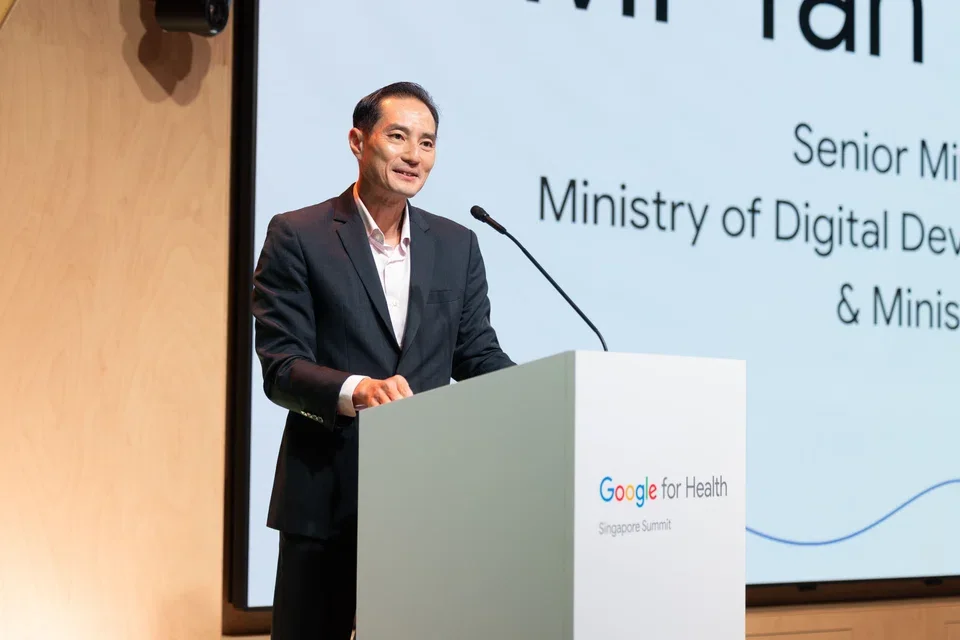
The NHG Health programme will combine its de-identified population health database with Google’s geospatial tools to build predictive insights. Climate and environmental information, together with search and behavioural signals, may be used to forecast risks including chronic disease and frailty. An AI-enabled health coach could then provide residents with lifestyle advice and preventive guidance shaped by their circumstances.

The approach points toward prevention delivered in communities and homes, rather than care centred only on hospital visits. Senior Minister of State for Health Tan Kiat How said the NHG Health work could help extend care into those settings. His point is that forecasting has practical value only if it can connect people to useful support before a health problem requires more intensive intervention.
That makes the programme’s design as important as the predictive model. A forecast has to be accurate enough to inform action, and the advice that follows must be relevant to the person receiving it. The source does not specify how the programme will measure predictive accuracy, determine which residents receive coaching or assess whether the guidance changes health outcomes. Those details will shape how its early results can be judged.

Using search and behavioural signals alongside health and environmental data also makes the quality and interpretation of inputs central to the effort. De-identification is specified for NHG Health’s population database, while the article does not describe the handling of the other signals. For now, the stated aim is to develop preventive insights; whether those insights translate into better care will depend on evidence from use in the local health system.

Clinical AI faces an evaluation stage
Google DeepMind will work with the National University Health System to test and evaluate the company’s global AI co-clinician research initiative. The work is intended to explore ways AI could enhance clinicians’ capabilities. Google said it will study the system’s accuracy, safety and usefulness by comparing its responses with established clinical criteria.

This is an assessment effort, not evidence that the tool is ready for clinical deployment. Comparing responses with clinical criteria can help identify where a system performs well and where it falls short, but the article gives no results, timetable or details about the evaluation process. Its significance will depend on whether testing produces evidence that clinicians can use the tool appropriately in real work.
Tan said AI could enable forms of care that have been difficult to deliver at scale, rather than simply speeding up existing tasks. He also stressed that applications need rigorous testing before clinical use and continued monitoring afterward to help ensure they remain safe and effective. The distinction matters: a strong model alone does not establish that its output improves decisions or fits the conditions clinicians face.

For healthcare organisations, the practical test is whether an AI tool can connect trusted data to established workflows and support professional judgement. Patients and users also need reason to trust how a tool is used. Those requirements make evaluation and ongoing monitoring part of the work, rather than a final check after technical development.
Local research linked to global teams
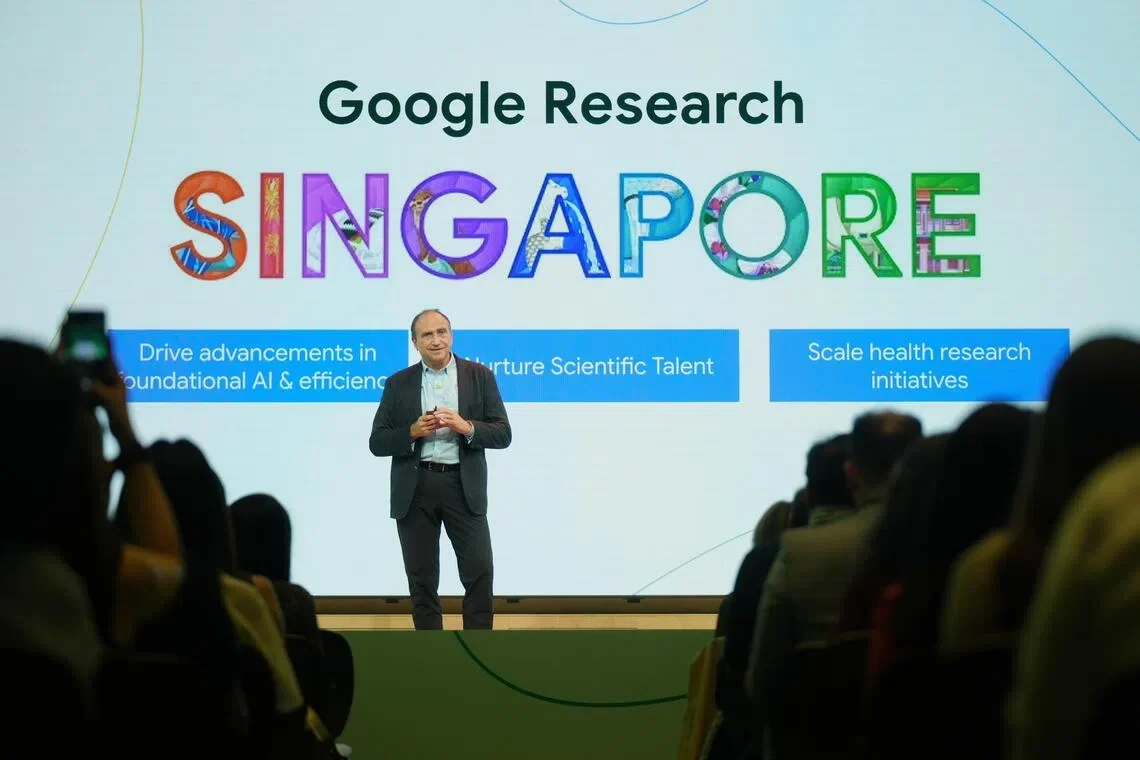
Google’s new Singapore research hub will work with the company’s global teams, with a focus on improving the efficiency of frontier AI models. It will also collaborate with local universities, including the National University of Singapore and Nanyang Technological University, to support scientific research and develop research talent.
Google vice-president and Google Research general manager Yossi Matias said the hub would help extend existing health research initiatives into local healthcare settings. One example is MedGemma, Google’s open-source AI model designed for medical applications. The company’s stated plan connects local research capacity with tools and teams already operating across its wider organisation; it does not establish how any particular model will be used in care.
Google Singapore country managing director Ben King said the company hopes to develop healthcare AI locally for eventual use internationally. That ambition depends on more than building technology in Singapore. Local testing can help show how a tool performs in a specific health system, while wider adoption would require evidence that its benefits and safeguards hold in other settings too. The article does not identify any international deployment plans.
The programme and hub build on a previous AI effort with Google announced earlier this year, which aims to apply the company’s advanced models to societal challenges and opportunities. Tan said the new work could help Singapore develop and validate healthcare applications with potential for use elsewhere, while cautioning that research breakthroughs do not automatically become real-world gains.
For NHG Health, the National University Health System and the universities involved, the immediate work is to establish evidence: whether predictions are useful, whether clinical responses meet the relevant standards and whether systems can operate safely within care. Google’s Singapore plans set out the research and testing agenda. The results of that work will determine whether the ambition to extend prevention and clinical support can move from model development into routine practice.


