Hong Kong’s Apartment Horror Films Turn Housing Pressure Into Fear
From cramped corridors to unaffordable homes, Hong Kong horror films make property pressure and urban folklore part of the terror.
In Hong Kong’s apartment horror films, the most unsettling presence may be the home itself. Cramped rooms, steep prices and the uneasy thought of who lived there before turn housing into a source of fear—and give filmmakers a way to examine the city’s economic pressures through folklore.
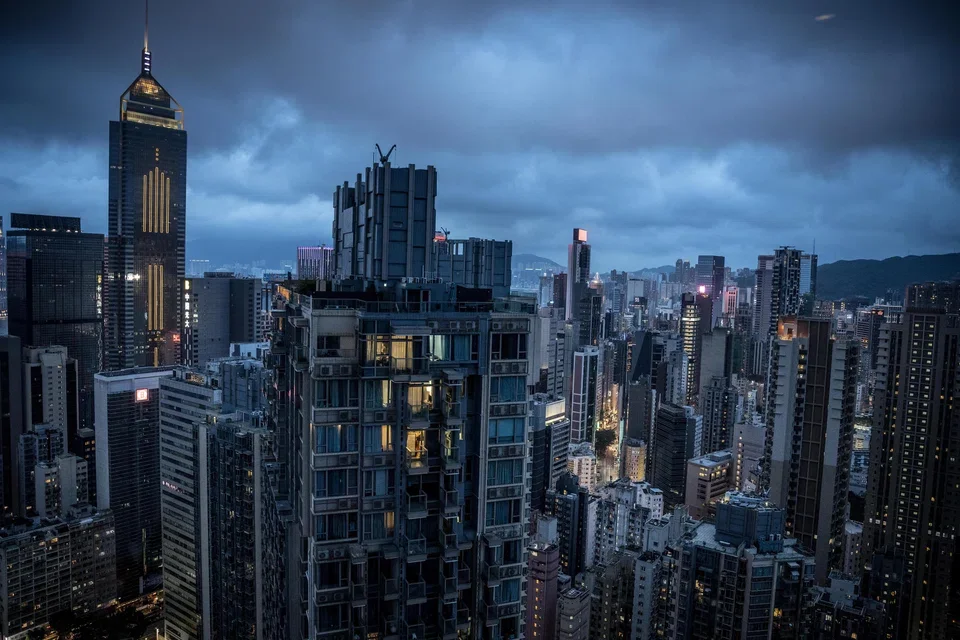
Hong Kong is among the least affordable property markets on the planet. A car park space can cost more than half a million dollars, while some residents live in subdivided units known as “coffin homes.” That scarcity is more than scenery in the films: it shapes what characters want, what they can’t afford and what they fear sharing.
“In Hong Kong, the ghosts and the spirits are trapped in the apartment with you,” said Roy Tan, a screenwriter and filmmaker in the city. “You can’t get out, and they can’t get out either.” The image captures the subgenre’s particular tension: people and spirits confined together in housing where privacy and space are already scarce.

Coffin Homes (Fruit Chan, 2021) pushes that idea into splatter-filled satire, using the property market to expose the absurdities of capitalism. In the film, the dead object to the living encroaching on their space. Its premise draws on a local superstition that an unusually cheap apartment may have been the site of a tragedy or grisly crime.
Folklore gives these stories a footing in everyday belief. Tobias Zuser, a lecturer at the Chinese University of Hong Kong and Hong Kong Baptist University whose courses include global horror cinema, said Hong Kong folklore generally holds that the dead remain among the living. The result, he said, is a striking mix of a hyper-modern city and persistent folk beliefs. Superstitions often focus on appeasing spirits rather than denying they exist.
When the property market becomes the monster
The living face a different kind of dread: trying to buy a home. Pang Ho-cheung’s Dream Home (2010) makes that pressure explicit. Its central character works multiple jobs throughout her life to save for an apartment, then sees the owners raise the price at the last minute. Her response is a brutally violent spree, and the resulting deaths bring down prices in the building.
The film opens with a line that sets its pitch: “In a crazy city, if one is to survive, he’s got to be more crazy.” Its provocation is not a practical account of housing economics; it turns the gap between aspiration and affordability into horror. Film critic, researcher and programmer Bruce Lai Yung-Hang said the genre works as social commentary because it shows the strain between what people desire and what they cannot obtain. “Anxiety and desire are two sides of the same coin,” he said.
For Gary Bettinson, co-editor of Hong Kong Horror Cinema, the source of fear is often the place where characters live or move. “It’s not a monster – the monster is the property,” he said. The films take aim at housing pressures, along with landlords and developers portrayed as greedy or unscrupulous. Their stories make the home’s cost and control part of the threat.
 MTR bets US$5 billion on a Hong Kong city that doesn’t exist yet ·
 Why China’s stimulus keeps missing the mark

Fear built into the city’s layout
Hong Kong’s limited building space pushes development upward, giving its horror films a distinct visual language: tight interiors, shared passages and vertiginous heights. In Rigor Mortis (Juno Mak, 2013), veteran horror stars move through a phantasmagoric world of apparitions in narrow corridors and bloody fights in small rooms. The setting leaves little distance between a character and whatever is pursuing them.
Tan sees the lack of space as a defining source of material for filmmakers. “Around the world, it’s life, death and taxes,” he said. “But in Hong Kong, taxes are so low that it’s life, death and square footage.” The joke points to a real feature of the genre: square footage can carry the weight that a haunted mansion or remote landscape might bear in other horror traditions.
Elevators and rooftops extend that pressure into shared spaces. Out of the Dark (Jeffrey Lau, 1995), a slapstick horror comedy about attempts to exorcise a haunted apartment building, makes an elevator part of its claustrophobic setting. Rooftops offer a more exposed danger. Bettinson said they can become places of abjection and horror, where characters hover over an abyss or fall into it. Both Out of the Dark and Home Sweet Home (Soi Cheang, 2005), in which a mother and son are terrorised in their new apartment by what appears to be a monster, end on rooftops.
That reversal of the home’s promise is central to the films’ effect. A flat should offer shelter, but familiar walls, shared corridors and thin separations can make it feel as if there is nowhere safe to retreat. “The home turns against you; it’s a deep-seated fear,” Bettinson said.
Even the city’s ordinary sounds feed that uncertainty. Air-conditioners drip and hum; traffic echoes from below; pipes, neighbours and building staff provide plausible explanations for noises in the night. Zuser said residents get used to hearing strange sounds and often reassure themselves that the source is plumbing, a neighbour or a security guard. In these films, that everyday act of explanation becomes part of the unease: the setting keeps the supernatural close, while the pressures of living there make the fear feel familiar.


