Singapore Shares Edge Lower as Wilmar and UltraGreen.ai Weigh on Market
The STI slipped 0.03% as decliners outnumbered gainers. Wilmar fell 4.9%, while UltraGreen.ai dropped 15.9% after lowering its revenue outlook.
Singapore shares finished nearly flat on Thursday, but the benchmark’s small decline masked a broader tilt toward losses. The Straits Times Index (STI) fell 0.03 per cent, or 1.9 points, to 5,396.03. Weakness among several large-cap stocks and a majority of declining counters was partly offset by gains in OCBC and selected shares. A flat index can make for an undramatic headline; the spread of moves beneath it was less calm.
That distinction matters because an index records the net effect of its constituents, not how many stocks rose or fell. A few gains can cushion losses elsewhere, leaving the benchmark little changed even when the average share is under pressure. Thursday’s figures offer a clear example: the STI barely moved, while decliners outnumbered gainers across the market. Here’s the thing: the headline level describes the destination, but not the path the market took to get there.
Large-cap stocks move in different directions
Wilmar International was the weakest STI constituent, dropping 4.9 per cent, or S$0.16, to S$3.11. The fall extended a months-long slide, adding to a period of pressure on the shares. The company had also reported weaker underlying third-quarter earnings, a factor cited in the source coverage of its performance. That gives investors a company-specific reason to watch the stock, though one session’s decline alone can’t establish how the market is assessing the longer-term outlook.

Wilmar’s sharp fall stands out against an index that lost just 1.9 points. This is more significant than it looks: a constituent can post a sizable move while the benchmark remains almost unchanged, particularly when other large shares rise or hold steadier. The result is a useful reminder that index performance and individual company performance answer different questions. For anyone following the session, the STI’s finish doesn’t capture the full pressure visible in Wilmar.

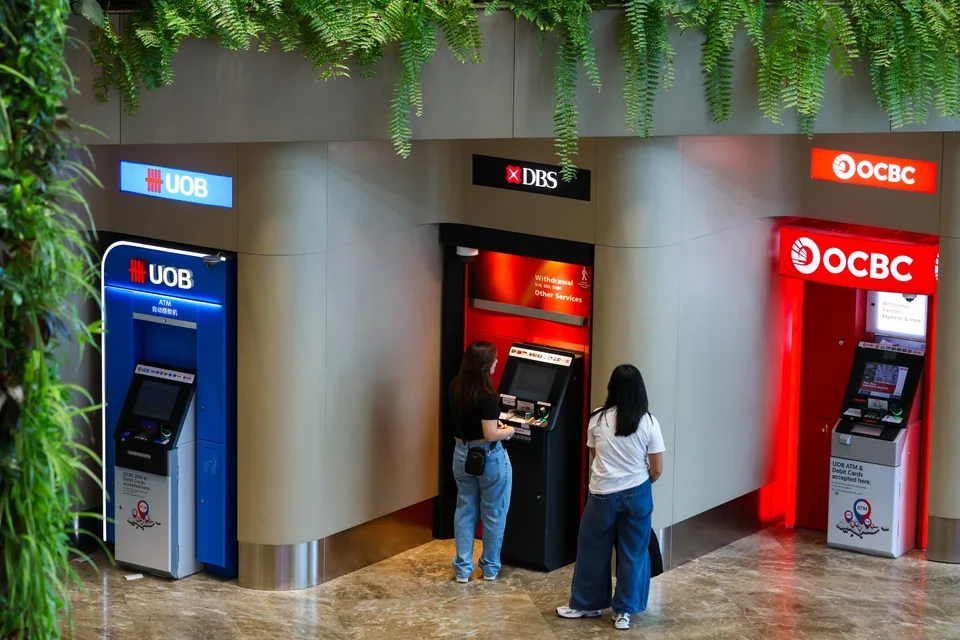
Genting Singapore led STI gainers, adding 1.7 per cent, or S$0.01, to S$0.60. The three local banks split. OCBC gained 1.1 per cent, or S$0.31, to S$29.34, while DBS lost 0.3 per cent, or S$0.19, to S$73.80. UOB slipped 0.1 per cent, or S$0.04, to S$41.50. The banks’ mixed performance meant there was no single sector direction to explain the benchmark’s small move, despite OCBC’s advance.

Revenue outlook puts UltraGreen.ai under pressure
Among stocks in the iEdge Singapore Next 50 Index, Top Glove was the strongest performer, rising 3.3 per cent, or S$0.01, to S$0.315. UltraGreen.ai had the steepest fall, losing 15.9 per cent, or US$0.09, to US$0.475. Its decline followed the company’s announcement that it expects FY2026 revenue to fall short of guidance. That revised outlook gives investors a direct company-specific explanation for the sharp move, though the announcement alone doesn’t establish how future results will develop.

Forward revenue guidance can matter because it shapes expectations before the corresponding sales figures are reported. When a company says revenue is likely to miss its guidance, investors have to reassess what they expected the business to deliver; the share price can respond quickly to that change. The size of UltraGreen.ai’s drop shows how sharply the market reacted on Thursday. It doesn’t, by itself, show whether the revised expectation reflects a temporary setback or a more persistent issue.

The contrast with Top Glove is a reminder that companies in the same index can face very different forces. One share rose while another fell sharply after an outlook update. The index’s overall result compresses these moves into a single figure, leaving company news and investor response to explain the detail. If you’re working in this space, the company announcements and the breadth figures both deserve attention; neither gives a complete account on its own.
Trading breadth and activity
Across the broader market, 304 counters declined and 250 rose. A total of 1.1 billion securities changed hands, with trading valued at S$1.8 billion. Decliners exceeded advancers by 54, a more direct measure of the session’s breadth than the almost unchanged STI level. That said, breadth is a description of how shares moved during the session, not proof that the underlying outlook for those companies has changed.
Salt Investments was the most actively traded stock by volume, with 67.3 million shares changing hands. DBS led by traded value: 3.6 million shares were exchanged for S$262.5 million. These measures capture different things. Share volume counts the units traded, while traded value measures their worth in dollar terms; a lower share count can still add up to a higher value when the shares command a higher price. A busy counter, then, isn’t automatically the market’s largest trade by value.
Regional benchmarks gave no single direction for the day. Hong Kong’s Hang Seng Index fell 0.6 per cent, Japan’s Nikkei 225 rose 1.1 per cent, South Korea’s Kospi declined 1.2 per cent and Malaysia’s FTSE Bursa Malaysia KLCI lost 0.2 per cent. Singapore’s slight decline sat within that mixed regional session, with Japan higher and the other listed benchmarks lower. The comparison provides context for the day’s trading, but the different index moves don’t explain the company-specific changes in Singapore.
What the session leaves to watch
The immediate points to track are the company-level factors already visible in the session: Wilmar’s extended slide alongside weaker underlying third-quarter earnings, and UltraGreen.ai’s updated expectation for FY2026 revenue. Those developments matter to the respective companies, but they shouldn’t be mistaken for evidence of a common cause behind every declining share. Thursday’s market was uneven, with individual news and trading pressure producing different outcomes across stocks.
For the market as a whole, the STI’s marginal loss contrasts with the broader tally of declining counters. That gap is useful context for reading a headline index result, though it doesn’t establish what will happen next. Subsequent price action and company updates will show whether the pressures seen in Wilmar and UltraGreen.ai persist beyond Thursday’s trading. The numbers here are underwhelming as a market-wide signal; the company-level moves carry the sharper detail. (And this is the part most people overlook.) The session’s clearest message is its unevenness.