Vietnam’s Affordable Luxury Market Faces a Test of Repeat Spending
Premium brands see room to grow in Vietnam, but income gaps and cautious spending narrow the market for repeat purchases.
Vietnam’s premium consumer market is drawing interest from restaurant groups, jewellery brands and property developers. The central question is whether rising incomes can support regular spending on better experiences—or whether demand will remain concentrated among a relatively small, cautious customer base.
The opportunity is visible in categories from speciality coffee and beauty to apparel and experiential dining. But population size and strong economic growth don’t tell the whole story. Brands need to reach households that can afford a modest premium often, not just try a higher-priced experience once.

Brands are testing the premium middle
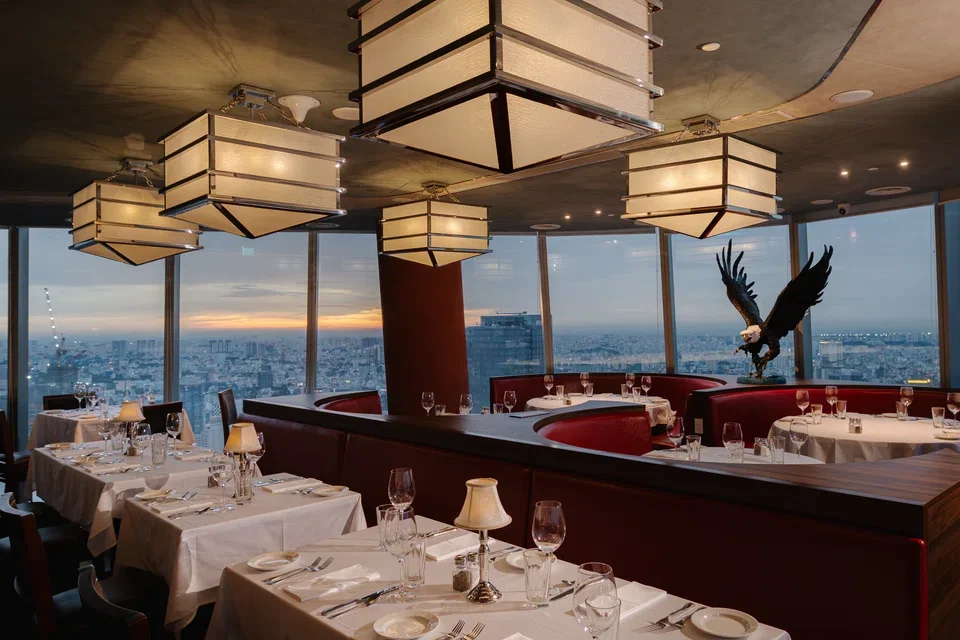
Ko Hospitality Group president Stanley Ko began weighing Vietnam for The Capital Grille’s first Asian restaurant in 2023. The country’s growth prospects helped make the case, and the Michelin Guide’s arrival that June offered another sign that premium dining was developing.

After three years searching for a site, the group opened the US steakhouse chain in September at Ho Chi Minh City’s Bitexco Financial Tower, in the city’s Central Business District. Vietnam’s economy expanded 8 per cent in 2025, among the fastest growth rates globally, Ko said.

The restaurant is a test of what Ko calls “affordable luxury”: a premium meal that can feel special without being reserved for the ultra-rich. He expects about 90 per cent of customers to be Vietnamese locals, including younger professionals marking occasions such as a graduation or promotion.

That expectation points to a business model built around local repeat demand, rather than tourist traffic alone. The distinction matters: a restaurant can attract attention at launch, but its longer-term prospects depend on how many customers return and what they are willing to spend each time.

Pandora sees room for growth in the same broad consumer shift. CEO Berta de Pablos-Barbier said Vietnam’s growing economy and young customer base give the jewellery brand reason to expect further expansion. Vietnam is currently its seventh-largest consumer market in Asia, leaving it below the company’s leading regional markets.
Keppel is applying the “affordable luxury” idea to housing, where the purchase is far more substantial. Its target is homes with considered design, good-quality finishes and well-planned amenities at prices accessible to a growing middle class.

Joseph Low, Keppel’s chief representative in Vietnam and president of Vietnam real estate, described a market in which buyers are becoming more selective about quality while affordability remains a priority. He also said high interest rates have made property-market liquidity more selective. In his view, projects that match buyers’ budgets and offer long-term value are better positioned to perform relatively well.

A large population doesn’t guarantee a large market
Fitch Solutions senior analyst Damien Yeo sees room for affordable-premium concepts to scale in Vietnam and across much of South-east Asia. Compared with consumers in mature markets such as South Korea, Japan and Singapore, he said, shoppers in Vietnam and much of Asean are increasingly prepared to pay a modest premium for better quality, branding, store environments and social currency. They remain highly attentive to value.

That combination is visible in premium bubble tea, speciality coffee, beauty products, apparel and experiential dining. Yet the potential customer base is narrower than population figures alone suggest.

BMI income data estimates that 116,134 Vietnamese households will have net household incomes above US$50,000 in 2026, compared with 1.6 million in Singapore. At a lower threshold, Vietnam has about 4.9 million households with net incomes above US$10,000, against Singapore’s 1.8 million.

Those figures point to a sizeable group with some capacity to trade up, alongside a much smaller pool of higher-income households. Singapore is also easier for luxury brands to serve because affluent households are concentrated in a compact area. In Vietnam, they are spread across multiple cities.

Yeo’s assessment is that spending power has improved across Vietnam and other developing Asean markets, while large parts of the population still put affordability ahead of premiumisation. Brands with a stronger case are likely to be those priced only slightly above mainstream competitors and able to deliver a noticeable improvement that local middle- and upper-middle-income customers value enough to enjoy regularly.
Zumwhere shows how quickly spending can cool
Ho Chi Minh City restaurant and bar chain Zumwhere offers a practical example of the gap between initial interest and durable demand. Founder and chief executive Le Tran Anh Vinh started the business in 2018 around “premium-mass drinking”—Vietnamese-style socialising with more emphasis on lifestyle, occasions and events.
Vinh drew on a concept he had seen in more developed Asian cities such as Singapore and Bangkok, where office workers might stop for craft beer or wine and food after work without treating the bill as a major expense.
Zumwhere priced its own craft beer at roughly 39,000 to 49,000 dong a glass when domestic draft beer typically cost about 25,000 dong for half a litre. At the time, craft beer commonly cost 90,000 to 100,000 dong. The offering sat above mainstream beer but well below prevailing craft prices.
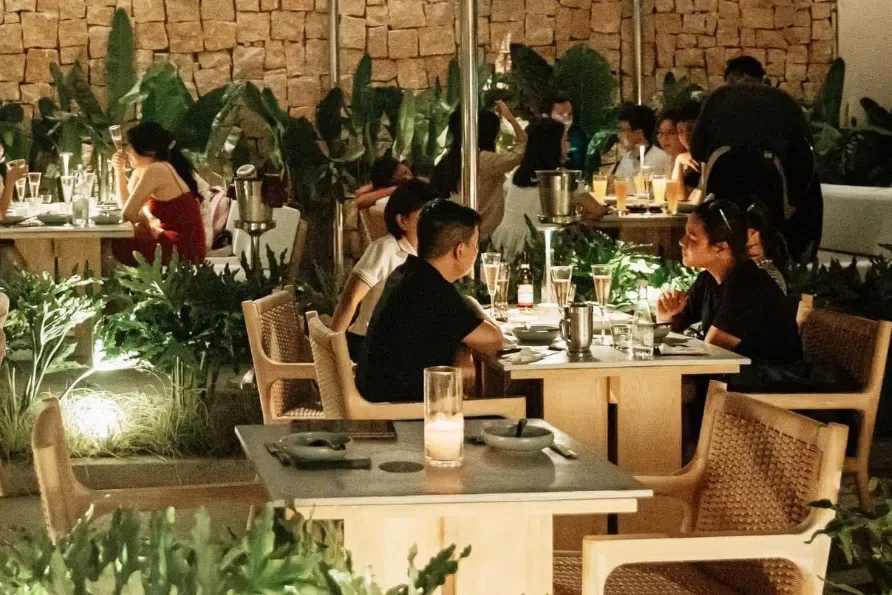
The outlets stayed busy for roughly two years after the pandemic, Vinh said. Their growth also coincided with TikTok’s early surge in Vietnam, which helped bring customers through social media. He initially read the crowds as evidence that consumers had become wealthier and more willing to pay for premium experiences.
The past two years have challenged that reading. Vinh estimates that, out of every 100 customers the chain once had, perhaps half have shifted towards mass-market options. The others still visit but do so less often, and they are more careful about spending during each outing. Zumwhere has five outlets.
“Vietnam is still overwhelmingly a mass market,” Vinh said. He added that assumptions drawn from Thailand or Singapore had been premature for Vietnam. The experience shows why a popular opening period can be a poor guide to the size of a lasting market: customers may try a premium offer, then reduce visits or spending when household budgets tighten.
Demand remains, but business models are shifting
Economic growth has not reached every household or business in the same way. Many affluent middle-class Vietnamese draw wealth from small firms and household businesses, which make up most of the country’s enterprises. Those businesses face pressure as they adapt to tighter rules, uncertainty in trade and changes to taxation.
In the first nine months of 2026, about 172,000 firms withdrew from the market nationwide, while 149,700 new businesses were established. Nguyen Minh Khang, vice-chief executive and chief financial officer of Big Investment Group, said the figures reflect a shift from older operating models towards newer, more formal structures, rather than a permanent loss of demand.
Aggregate consumer spending has remained resilient: retail sales of goods and services rose 13.4 per cent year on year in the first nine months of 2026, while accommodation and food-service revenue increased 16.7 per cent. Khang said the tougher environment has accelerated consolidation among small and medium-sized businesses with weaker finances.
Big Investment is pursuing an asset-light hospitality strategy, using long-term leases or business-cooperation contracts to work with hotel owners facing capital constraints. The company plans to bring in operating processes, a mixed-hotel concept and an experienced team to improve properties and raise their value.
Brookland Group & Partners, a private-capital firm based in Dubai and Singapore, recently agreed to invest up to US$10 million in Big Investment. The funds are earmarked for the group’s commercial property, nightlife and food-and-beverage projects in Ho Chi Minh City and the Mekong Delta.
Zumwhere is also maintaining a presence in higher-end hospitality through Wynnley Venue & Retreats, its premium conference and wedding venue operator. Vinh said the business is performing well, supported by corporate demand, even as the group restructures its core restaurant operation.
The market for affordable luxury appears real, but its depth depends on household budgets and the ability to turn occasional interest into regular spending. For brands, the test is whether customers keep coming back when each purchase has to compete with everyday costs.


