Tuas Power weighs Laos hydropower imports rising to 500 MW a year
A proposed five- to 15-year supply deal would scale imports from 100 MW to 500 MW annually, with seasonal supply and delivery still to be worked through.
A proposed hydropower deal with Laos could give Tuas Power access to as much as 500 megawatts (MW) of electricity a year, but the supply would build gradually and depend on resolving the practical challenges of seasonal generation and cross-border delivery.

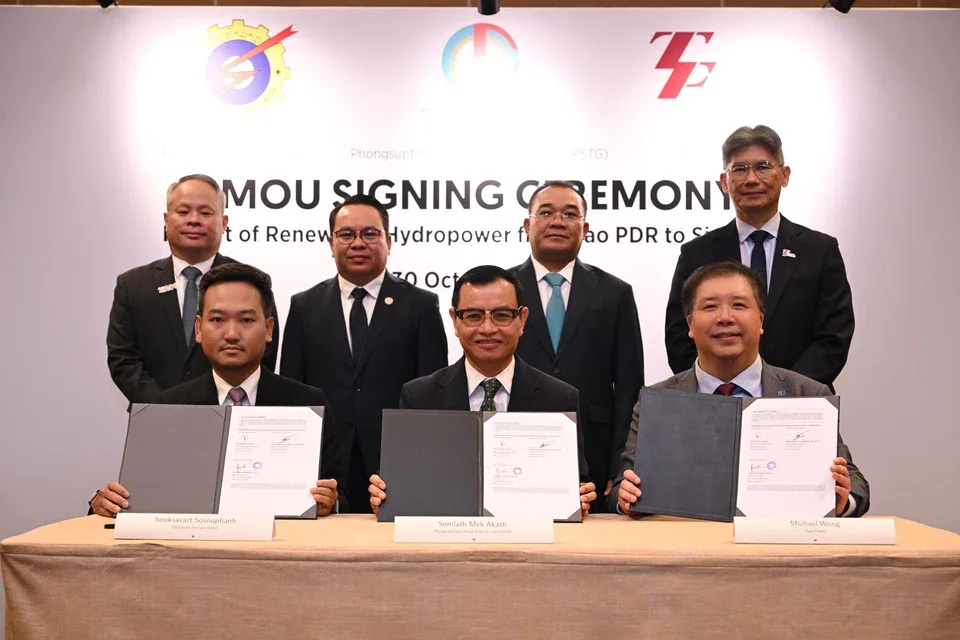
The proposed schedule starts at 100 MW in the first contract year, rises to 300 MW in the second and reaches 500 MW annually thereafter. The contract term under consideration is five to 15 years. Those figures describe a potential arrangement, not a confirmed supply commitment: Tuas Power, Laos state operator Electricite du Laos (EDL) and private renewable power developer Phongsupthavy Group (PSTG) have signed a memorandum of understanding to explore the terms.
The companies signed the MOU on Oct 30, on the sidelines of the Singapore International Energy Week. Tuas Power is part of China Huaneng Group. The proposed arrangement would connect Laotian hydropower resources with Singapore demand through regional electricity trade.

A phased supply against rising demand
At the proposed 500 MW annual level, the import volume would be equivalent to about 5.8 per cent of Singapore’s current peak electricity demand of around 8.6 gigawatts (GW), or 8,600 MW. That comparison gives a sense of scale, though peak demand and an annual supply arrangement measure different things: the proposed volume doesn’t establish how much electricity would be available at any particular hour.

Singapore’s peak demand could reach 13 GW by 2031, according to the Energy Market Authority. Against that possible increase, a 500 MW import stream could form one part of a wider supply mix. The agreement’s phased ramp-up means the first years would provide less power than the eventual annual volume, while the longer contract duration under consideration could offer more time to plan around the supply if the parties settle on firm terms.

Tuas Power chief operating officer Michael Wong said the collaboration supports the company’s long-term roadmap for customer decarbonisation and a regional energy transition towards net-zero carbon. For electricity users, the significance would depend on the delivered supply profile, the commercial terms and whether customers choose to buy associated certificates.
Seasonality shapes the delivery question
PSTG chairman Phongsavath Senaphuan described hydropower as a seasonal resource and said the parties would work towards a supply profile that is transparent and deliverable if the arrangement proceeds. That caveat goes to the heart of the proposal: an annual target alone doesn’t explain when electricity would arrive or how consistently the supply could match demand.

Hydropower output can vary with seasonal water availability. A buyer and its suppliers therefore need to understand the timing and reliability of deliveries, alongside the expected volume over the contract period. The source material gives the proposed annual ramp-up and possible term, but doesn’t set out a detailed delivery schedule, pricing structure or final contract. Those matters remain part of the exploration.

Cross-border supply also relies on regional connections that can carry electricity between national networks. Tuas Power said the arrangement could contribute to clean-energy integration under the Asean Power Grid vision, a plan to connect South-east Asian electricity systems. EDL managing director Souksavart Sosouphanh said regional power trade had made progress in recent years and that the Lao People’s Democratic Republic’s hydropower resources could contribute to regional energy needs.
For the companies involved, the next practical measure will be whether they can translate the MOU into a supply arrangement with clearly described volumes and delivery conditions. For customers and other market participants, the difference between an exploration agreement and contracted, deliverable electricity matters: the former sets a direction, while the latter establishes what supply can be planned around.
Certificates offer a separate customer option
The hydropower could be paired with Renewable Energy Certificates (RECs). Customers may have the option to buy electricity bundled with the certificates, which are market-based instruments used to account for electricity consumption associated with fossil fuels. The source does not specify whether certificates would be included by default, how many would be available or what they would cost.
That optional structure leaves customers with a choice about whether to purchase the certificates alongside the power. It also means the eventual product could combine two elements: electricity delivered through the regional supply arrangement and certificates associated with renewable generation. The parties have not yet detailed how such bundles would be priced or offered.
Wong said the potential collaboration could support regional clean-energy integration, while Senaphuan emphasised the need for a transparent, deliverable supply profile. Those conditions will determine how much weight the proposal can carry in Singapore’s future supply mix. The key markers to watch are whether the parties agree on the contract term, confirm the staged volumes and establish how seasonal output will translate into dependable deliveries.


