Keppel’s Q3 Profit Rises 20% as Core Business Grows; Legacy Assets Drag on Nine-Month Result
Keppel’s core business lifted Q3 and nine-month profit, while costs and impairments on remaining non-core assets weighed on the group result.
Keppel’s third-quarter growth reflects a widening gap between its continuing operations and the legacy assets it is working to sell. Net profit rose 20 per cent for the quarter ended Sep 30, while profit at “New Keppel” — the company’s term for its continuing core business — increased close to 15 per cent year on year. For the first nine months of 2026, however, group net profit fell 40 per cent as the value of non-core assets still on its books declined.

That split is central to reading the update. Stronger connectivity and steady infrastructure earnings supported the core business, while impairments, depreciation, operating costs and holding costs reduced the gross asset value of the assets marked for divestment. Keppel said that value was down 4 per cent. The two measures describe different parts of the group’s performance, and the company plans to report changes in the remaining non-core portfolio’s gross asset value to give the market more visibility into the drag.

Core operations gain ground
New Keppel posted net profit growth of more than 20 per cent for the first nine months, led by infrastructure and connectivity. Recurring income rose more than 10 per cent year on year over the same period, with contributions from asset management businesses, sponsor stakes and co-investments, and the operating platform.
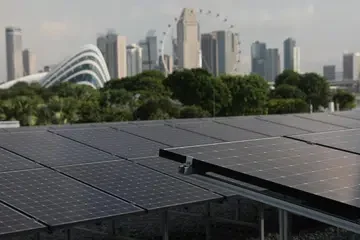
The infrastructure division improved its nine-month performance. Within it, the integrated power business recorded 7 per cent growth in earnings before interest, taxes, depreciation and amortisation. Keppel attributed the increase to contributions from its 600 megawatt Keppel Sakra Cogen Plant, which began operations in May 2026.
Connectivity, which includes the data centre portfolio, is focused on markets where power is constrained. Its technology solutions business also expanded: revenue exceeded S$900 million, and earnings before interest, taxes, depreciation and amortisation grew 110 per cent year on year for the nine months. These figures point to faster growth in technology solutions than in the wider infrastructure business, though the update did not provide segment profit amounts.

Keppel’s fund management business added S$19.5 billion in new funds under management year to date. About half came from infrastructure and connectivity fund strategies, which the company said reflected greater investor demand for energy and digital infrastructure. It generated S$354 million in asset management fees during the first nine months, up 18 per cent year on year. Over that period, it completed about S$4.5 billion in acquisitions and S$3.5 billion in divestments.

Asset sales remain a key measure
The real estate division reported more than S$2.4 billion of non-core property monetisation year to date. That includes a proposed sale of a 51 per cent interest in Keppel South Central to Keppel Reit. Across the wider non-core portfolio, Keppel said about S$3.7 billion was planned for divestment in 2026 to date.
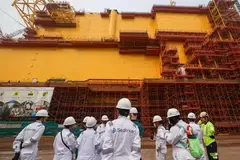
The company had realised S$940 million over the year so far. It expected about S$600 million more by year end, subject to completion of the sale of the first six legacy rigs to Keppel Offshore Fund. That would bring likely 2026 proceeds to more than S$1.5 billion, against a full-year target of between S$2 billion and S$3 billion.
Keppel’s dividend framework separates the two parts of the business: ordinary dividends will be determined by New Keppel’s earnings, while the company aims to pay special dividends amounting to 10 to 15 per cent of realised proceeds from non-core asset monetisation. The cash proceeds and timing of asset sales therefore matter alongside operating profit. Any delay or change in sale values could affect the amount realised within the year.

Energy supply and M1 remain watchpoints
Chief executive Loh Chin Hua said Keppel was monitoring Indonesia’s move to cut natural gas exports to Singapore and would work with stakeholders to support reliable energy supply. He said Keppel has a mix of liquefied natural gas and piped natural gas, with piped gas sourced from Malaysia. The company is also working to broaden energy sources, including through its appointment as one of three power generation companies selected by the Energy Market Authority to supply biomethane.
Cindy Lim, chief executive of Keppel’s infrastructure division, said piped natural gas accounts for more than half of the company’s gas supply, with the remainder covered by long-term liquefied natural gas contracts. She said Keppel may also procure gas in the spot market during unplanned disruptions or when opportunities arise. Lim declined to give the expiry dates of piped gas contracts, citing commercial sensitivity, but said they last at least until the end of 2030. The mix offers multiple supply routes, while the company’s exposure to changing availability and spot-market conditions remains relevant.
Keppel is also assessing options for M1, which it had planned to sell to Simba as part of its non-core portfolio monetisation. That proposed transaction was halted in May 2026 after the Infocomm Media Development Authority began investigating Simba’s misuse of telecommunications spectrum. Loh said Keppel was monitoring developments. On discussions with StarHub about a possible M1 transaction, he said a deal could be complex and would require approval from shareholders and the relevant authority if pursued. He added that there was no assurance a final agreement would emerge, and that Keppel would remain focused on M1’s performance.
Keppel shares ended Thursday up 1.1 per cent, or S$0.11, at S$10.24. The quarter’s core earnings growth gives a clearer view of the business Keppel is building; the pace of asset sales, legacy portfolio costs and energy supply conditions will help determine how that progress translates into group results.


