CMA CGM’s Electric Barge in Vietnam Secures Eight-Year Nike Cargo Commitment
Nike will fill 90% of CMA CGM’s electric barge capacity for eight years, supporting a service built around Vietnam’s inland waterways.
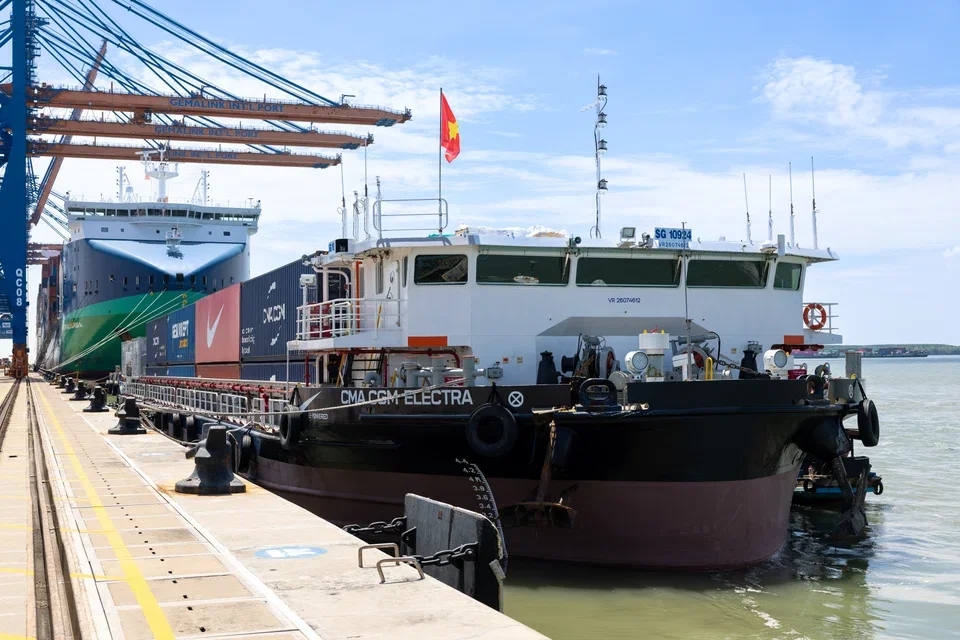
Nike’s long-term cargo commitment gives CMA CGM a commercial base for its first fully electric barge, launched in Vietnam on Oct 29. The sportswear company has agreed to fill 90 per cent of the vessel’s capacity for eight years, helping offset an upfront cost that CMA CGM says is approximately twice that of a comparable diesel-powered vessel.
The arrangement links a large, established customer with an electric freight service between Nike’s inland cargo drop-off location and the Gemalink deep-sea terminal at the Cai Mep port complex. Both sites are within the expanded Ho Chi Minh City area. The vessel is operated with Vietnamese port operator Gemadept and is Vietnam’s first fully electric inland container barge.

A customer commitment addresses the cost hurdle
For CMA CGM, the project’s economics depend on more than the vessel itself. Chief executive officer of CMA CGM Asia Pacific Bo Wegener said the commercial case also rests on charging infrastructure, renewable electricity supply and costs, sustained customer demand, and efficient operations. He described Nike’s agreement as a strong foundation for the project’s viability.

That commitment matters because a higher purchase cost must be supported by predictable use over time. A customer occupying 90 per cent of capacity for eight years gives the operator a clearer basis for planning the service. The remaining commercial questions include how reliably the vessel can run, how energy costs develop, and whether the operating model can serve additional customers.

The barge is designed to handle more than 50,000 twenty-foot equivalent units (TEUs) annually. Its 180 km round trip is powered by certified renewable electricity from a dedicated solar farm at Gemalink. The companies expect it to prevent approximately 778 tonnes of carbon dioxide emissions each year and offer a lower-carbon option than road transport for inland cargo movements.

The emissions figure is an estimate tied to the stated service and comparison. The vessel produces no direct greenhouse gas emissions while operating, according to the source description. The wider emissions outcome also depends on its electricity supply and how much cargo it carries in practice.
Waterways connect production centres to port
Vietnam’s extensive inland waterway network is central to the case for testing the model there. The barge will move cargo between an inland collection point and a deep-sea terminal, linking production-side logistics with export shipping. This route gives CMA CGM a chance to assess whether electric vessels can fit into cargo flows already moving between inland centres and ports.

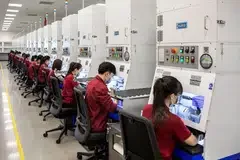
Nike has manufactured in Vietnam since 1995, when it began with five contract footwear factories. The country has since become the company’s largest production base worldwide. In fiscal year 2026, factories in Vietnam produced approximately 52 per cent of Nike-branded footwear and 34 per cent of its apparel globally, according to the company’s latest annual report.

Those production shares help explain why Nike can support a dedicated service on this route. They also make the barge relevant to a broader supply-chain effort: the company is seeking to reduce emissions across its global operations, while CMA CGM is working to lower the impact of its transport and logistics activities in South-east Asia.
Battery operations and future deployment
CMA CGM designed and developed the vessel, which was built at a shipyard in China. Chinese manufacturer CATL supplied the battery technology. The barge has an operating range of 180 kilometres and takes approximately four hours to recharge. Its batteries can also be swapped in about 30 minutes while containers are being loaded or unloaded, allowing energy replenishment to take place during routine cargo handling.
That combination gives the operator two ways to restore power, though the practical value will depend on how well charging or battery swaps fit the service schedule. The companies will need the vessel’s operating performance, energy supply and handling arrangements to work together consistently. The source provides no deployment timetable beyond the current project.
CMA CGM operates more than 700 vessels serving over 420 ports worldwide and carried more than 24 million TEUs globally in 2025. It has operated in Vietnam since 2006 and runs 29 weekly mainline services calling at seven ports nationwide. Wegener described Vietnam as a key manufacturing and logistics hub with substantial cargo movement between inland production centres and deep-sea ports.
The company is exploring whether the electric barge model could suit other customers’ supply chains in Vietnam and elsewhere. It is also considering inland waterway networks in Europe, including northern France, the Benelux region along the Rhine, and the Seine and Rhône rivers. No specific investment plans or deployment dates have been set.
Expansion will depend on what the Vietnam service demonstrates about operating performance, local infrastructure and customer demand. For now, Nike’s eight-year commitment gives CMA CGM a substantial anchor for testing whether electric inland freight can work commercially on a route connecting a major production base with a deep-sea port.