Japan’s Price-Sensitive Shoppers Shift Spending to Discount Retailers
Rising prices are pushing Japanese shoppers away from convenience stores, while discount chains gain traffic and retailers adjust prices and store formats.
Japan’s shift from long-running deflation to sustained price increases is changing where households shop. Convenience store operators are losing customers as shoppers seek lower prices at discount supermarkets, a change that could weigh on consumption in an economy where private spending accounts for about half of gross domestic product.

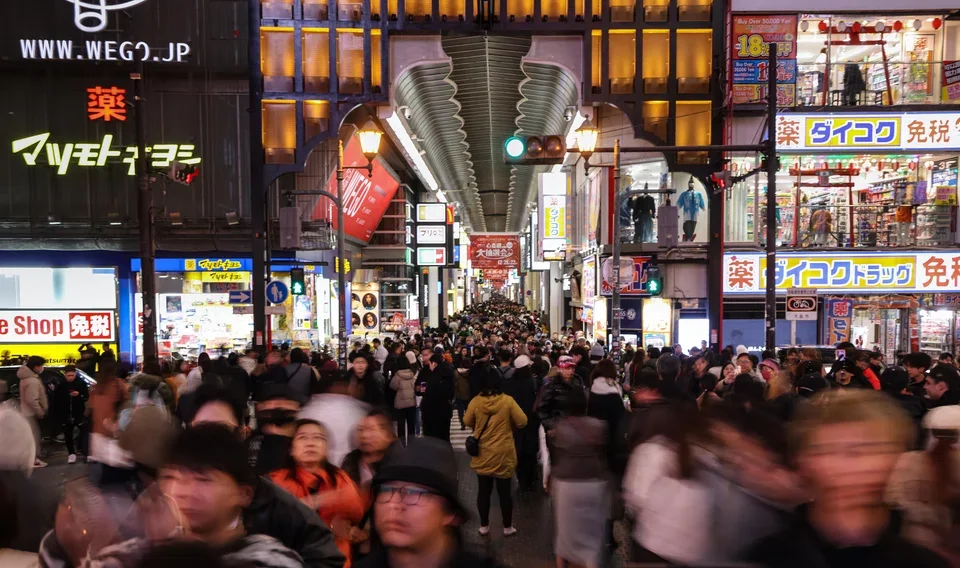

Kana Sekiya, 43, once bought groceries near a Tokyo train station after work. Now she drives more than 30 minutes on weekends to stock up at discount supermarkets. “I’ve totally stopped going to convenience stores because of the rising cost of living,” she said. Meat, vegetables and alcohol have become harder to fit into her budget, and she now shops at Lopia and OK to save money.
Her change in routine reflects a broader squeeze. Underlying inflation rose in September at its fastest annual pace in three years, exceeding the Bank of Japan’s 2 per cent target. The central bank was expected on Friday (Oct 30) to indicate that an interest rate increase could come as soon as December, which would move the economy into territory it has not seen for more than 30 years.

Convenience stores feel the shift
The pressure is showing up in store traffic. Customer numbers at convenience stores have declined for 15 consecutive months, Japan Franchise Association data show. In September, the count was down 3.8 per cent from a year earlier, the steepest fall since September 2021, during the Covid-19 pandemic.

Seiji Kitamura, head of group merchandising strategy at Seven & i, the owner of 7-Eleven, said shoppers’ focus on prices had intensified beyond the company’s expectations. Seven & i operates around 23,000 outlets across Japan. “Consumers have become extremely demanding when it comes to prices,” he said. “Their desire to save has grown more than we anticipated.”

That change matters beyond store operators. “With private consumption accounting for about half of Japan’s (gross domestic product), there are concerns that increased household belt-tightening could weigh on the broader economy,” said Ryohei Ikeda, an analyst at Mizuho Research Institute. When households redirect spending or cut purchases, the effects can reach retailers and suppliers as well as the wider economy.

For years, Japanese businesses were reluctant to raise prices. In 2016, ice pop maker Akagi Nyugyo apologised after increasing a product’s price by 10 yen (US$0.06). That pattern has changed: food and drink makers, facing a weak yen and higher oil prices, raised prices on more than 20,000 items in 2026 for a second year. Shoppers are now making choices against that higher price baseline.

Convenience store chains are responding with lower-cost offers. Seven & i is expanding its “Seven The Price” own-brand range, which includes pre-cooked chicken and bacon rashers. The products are priced around 20 per cent below branded alternatives. In September, FamilyMart said it would offer morning discounts for customers who bought bread or rice balls with drinks such as coffee.
But FamilyMart acknowledges the challenge of matching what customers want. “Competitors such as drugstores and mini-supermarkets are putting value for money front and centre,” said Takeshi Inoue, a corporate manager at Itochu’s FamilyMart. “We haven’t been able to fully meet customers’ needs.”
Discount stores attract more visits
Retailers with a sharper focus on price are seeing stronger traffic. Seiyu, acquired in 2025 by discount chain Trial Holdings, reported a 6.9 per cent year-on-year increase in customer numbers at existing stores in September. Seiyu president Hitoshi Narakino said wage growth had not kept pace with inflation, creating favourable conditions for discount retailers.
Trial has brought some of its low-priced prepared foods to Seiyu: pork cutlet rice bowls for 299 yen and egg sandwiches for 199 yen. The chain is also increasing supplies of fresh meat and fish. The retailer’s customer growth illustrates how a mix of value pricing and everyday essentials can appeal to households trying to manage a tighter food budget.
The competition for routine grocery purchases is also spreading into smaller shops. Trial is opening compact Trial GO stores in Tokyo, while Aeon, Japan’s biggest retailing group, is expanding its My Basket chain. These formats put more pressure on convenience stores by offering shoppers nearby access to lower-priced alternatives.
Seiyu’s recent growth follows a series of ownership changes. Walmart struggled to establish the business, which was acquired by private equity firm KKR before being sold to Trial. The current increase in customer numbers shows a different phase for the chain, though the reported September figure alone does not establish whether the gain will continue.
New revenue ideas as costs rise
Convenience store operators face pressure on both sides: shoppers are more price-sensitive, while franchisees contend with higher labour and utility costs. Some chains are trying to earn more from non-food uses of store space. FamilyMart plans to install crane games and capsule-toy machines in about 5,000 shops, using space previously allocated to magazines and eating in. Lawson, owned by Mitsubishi Corp and KDDI, has installed toy machines in about 1,500 stores.
These additions may diversify what stores offer, but they do not directly resolve the central grocery problem: customers are weighing convenience against price. The success of lower-priced own-brand goods, morning bundles and new in-store attractions will depend on whether they bring shoppers back often enough to offset weaker visits.
Household budgets may face further pressure. Taro Saito, a research fellow at the NLI Research Institute, said higher oil prices linked to the Iran war could feed into electricity and gas bills, pushing inflation above 3 per cent in early 2027. He also said real wages were likely to turn negative in 2027. Those are forecasts, and the eventual effect on household spending will depend on how prices and wages develop.
Price sensitivity is visible outside food retail, too. Fast Retailing, the parent company of Uniqlo, said it was dropping a planned price increase for a line of colour socks that had been due to take effect on Nov 10. “As socks are an essential everyday item, in Japan we reconsidered our planned price revision,” the company said.
For retailers, the test is whether price changes and store adjustments can keep everyday customers without eroding the economics of each sale. For the broader economy, the question is how long households will keep trimming spending as living costs rise and wages struggle to keep pace.


