Insead Launches AI and Work Research Lab With US$3 Million Google Funding
Insead’s new lab will study AI’s effects on learning, work and relationships, with US$3 million in backing from Google.org and Google DeepMind.
Insead is putting US$3 million behind a research effort to examine how artificial intelligence is changing people’s working lives, learning and relationships. The new Research Lab for Human and Organisational Thriving will study those effects across three connected areas: learning, working and relating.

The global initiative was unveiled on Friday, Oct 30, at the Insead AI Forum Asia 2026, held at the school’s Asia campus in Singapore. Google.org, the company’s philanthropic arm, and Google DeepMind, its AI research unit, provided the funding. The size of the grant gives the new lab room to support research and academic development as it examines a question facing employers and educators alike: how can people retain meaning, well-being and human connection as AI changes how tasks are done?

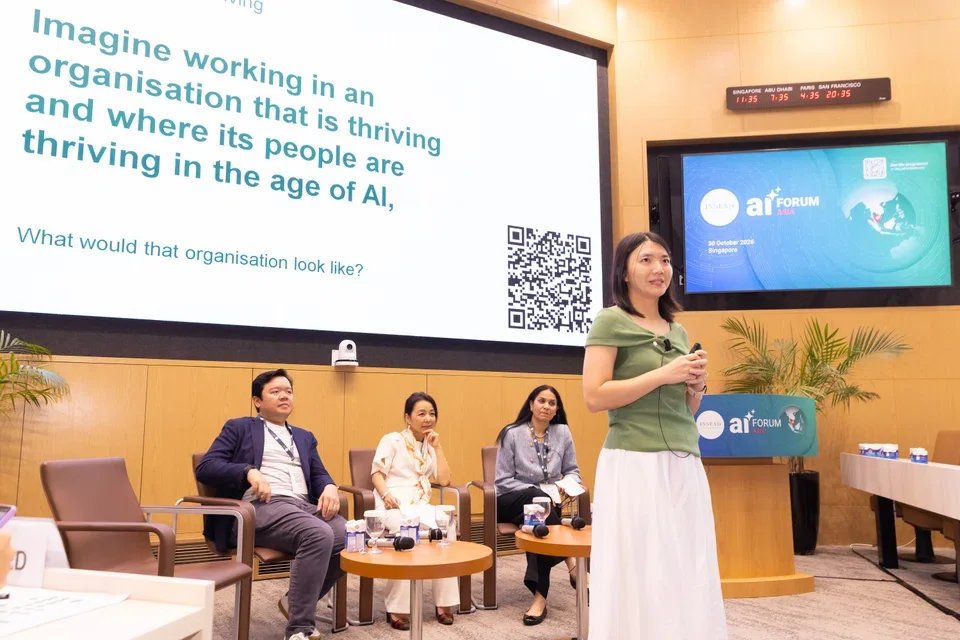

Winnie Jiang, an associate professor of organisational behaviour at Insead’s Singapore campus, will lead the lab as its academic director. The initiative sits within the school’s Human and Machine Intelligence Institute, a cross-disciplinary research institute.

Research across learning, work and relationships
The three areas the lab has chosen overlap in practice. AI tools can shape how people acquire skills, how teams divide work and how colleagues interact. Changes in one area can affect the others: a shift in workplace tasks, for instance, may change which skills workers need to learn and how much time they have for collaboration.

Insead says the lab will investigate how human, social and psychological capital can be strengthened amid rapid technological change. It will also examine how academic institutions need to evolve. That remit places workplace experience alongside education and personal well-being, rather than treating adoption as a question of productivity alone.

The school describes AI as a technology with far-reaching effects on how people learn, work, live and interact. It also says the possible benefits come with risks that deserve careful attention. The research is intended to add evidence about how people and organisations can respond as the technology changes work and daily life.

For employers, that leaves practical questions to explore: how work is organised when AI takes on parts of a role, whether workers can build economically viable and psychologically meaningful careers, and what helps teams maintain strong relationships. The source does not set out particular studies or findings yet, so the lab’s initial contribution will depend on the research it develops and the evidence it produces.

Funding supports scholars and wider exchange
Alongside its research programme, the lab plans to support emerging scholars through a PhD research award and a postdoctoral fellowship. It also intends to convene an annual global conference and develop partnerships with organisations, schools and governments to help translate research into practice.

Those activities could connect academic work with the settings where AI is changing decisions about training, staffing and collaboration. Their value will depend on how the lab selects research questions, shares results and turns evidence into useful guidance for organisations. The planned conference and partnerships provide channels for that exchange, while the fellowships can help bring new researchers into the field.
The lab draws on Insead’s broader academic network. Its institute’s core academic team includes Philippe Aghion, the 2025 Nobel laureate in economics, and Phanish Puranam, recipient of the 2025 Oskar Morgenstern Medal. The University of Vienna awards the medal for distinguished academic contributions to business, economics and statistics.
Well-being is part of the measure
Sepi Hejazi Moghadam, Google.org’s head of foundations of science, said AI’s success “will not be measured solely by efficiency or productivity gains, but by whether it empowers people to live more fulfilling lives”. He added that navigating rapid transformation requires thoughtful research and a commitment to human well-being.
Jiang said the lab aims to generate actionable insights with real-world impact. Its research, she said, will look at what allows people and organisations not only to adapt to a changing environment but to thrive within it. She described the goal as understanding how people can expand their capabilities, build economically viable and psychologically meaningful working lives, and cultivate strong relationships in the age of AI.
That framing puts the human consequences of adoption alongside the business case. Productivity may be measurable, but the quality of work, the ability to develop skills and the strength of social ties require different kinds of evidence. Insead’s programme is designed to examine those dimensions together. What matters next is whether its research can show how organisations and educational institutions can respond in ways that support both capability and well-being.


