Asean Energy Grid Review Weighs Data Centre Demand, Nuclear and Cable Links
Asean’s new grid study will assess surging data centre demand and emerging power sources, while cross-border projects hinge on workable commercial frameworks.
Asean’s next regional power study will have to account for a faster-moving demand picture: data centres are expanding, and the technologies considered for future electricity supply now include storage and potentially small nuclear reactors. But the region’s ability to trade power across borders will depend on whether projects can secure workable commercial terms and clear frameworks.

The Asean Centre for Energy has begun work on the fourth Asean Interconnection Masterplan Study (AIMS), which examines the viability of cross-border electricity trade. Executive director Razib Dawood told The Business Times that the study is likely to be completed in about a year. The previous edition, released in 2024 by the centre and the Asean Power Utilities/Authorities Council, did not cover data centres.

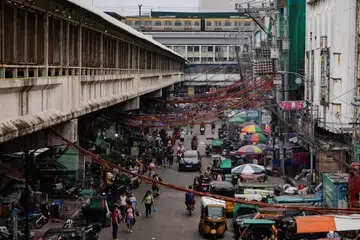
That omission has become harder to sustain. The facilities have spread across the region and consume substantial amounts of electricity. In October, the centre projected that data centres would account for 20.7 per cent of Asean’s electricity demand growth between 2025 and 2030. Forecasts made before the recent build-out could not have anticipated that facilities would suddenly require gigawatts of power over a short period, Dawood said.

That concentration of new demand matters to grid planning. A study that looks only at long-term supply options may miss the challenge of connecting large loads quickly, while a plan built around current demand may leave little room for future sources. The AIMS review is expected to consider both sides: where new electricity may be needed and what technologies could help meet it.

New sources enter the planning picture
The options Dawood identified include pumped hydro storage, battery energy storage and small modular nuclear reactors over the longer term. The study could also make room for nuclear energy in the region’s power mix. Asked whether nuclear electricity might eventually be traded through the Asean Power Grid (APG), Dawood said that could be possible, drawing a comparison with France exporting nuclear power to neighbours such as Germany.
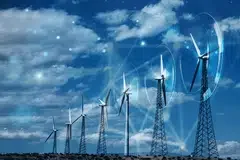
That is a possibility for consideration, not a description of an existing regional trade route. The source gives no timetable or project details for nuclear exports. The practical question for the study is how emerging supply and storage options might fit into a system designed to move electricity between countries.

Wind exports have a more immediate reference point. A cross-border project exporting wind power from Laos was completed in 2025. Singapore has also given conditional approval for a project to import up to 1.3 gigawatts of renewable electricity from Vietnam and Malaysia, including wind-generated power. Those examples show how trade could connect generation in one part of the region with demand elsewhere, while the newer study tests the broader scope for such links.

Commercial terms are the grid’s constraint
Regional power links have been discussed for more than three decades, and Dawood acknowledged that some observers may question why progress should accelerate now. He sees a renewed case for cooperation amid a global energy crunch linked to conflict in the Middle East. Work on the details has continued: in October, Asean energy ministers endorsed terms of reference for a framework covering the development of submarine power cables, including their installation, upkeep and protection.

The scale of some proposed links makes those details consequential. Certain APG projects could require subsea cables running more than 800 kilometres, beyond the current world record of 630 kilometres. Alessandro Panico, chief commercial officer and senior vice-president of transmission at Italian cable manufacturer Prysmian, said the technical task appears manageable: existing technology theoretically permits distances above 1,000 kilometres.
For Panico, the more immediate obstacle is whether the business case works. Projects need to be bankable, he said, and that requires political willingness and clear frameworks. This puts commercial and institutional arrangements alongside engineering as conditions for a functioning regional grid. A cable’s technical range alone cannot establish who pays for it, how cross-border power is traded or how project participants share the risks.

Prysmian has operated in Singapore for more than 50 years and has supplied subsea cables for regional projects that connect islands to electricity systems. One example is the cable system linking Phu Quoc to Vietnam’s mainland grid. APG plans would extend the region’s experience into cross-border undersea links: several electricity connections already cross national borders over land, but South-east Asia has only one cross-border subsea interconnector, between Singapore and Johor.
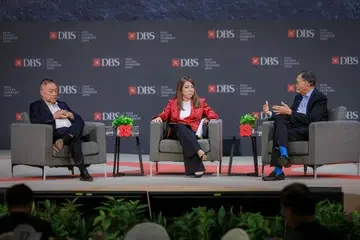

More interconnections could create demand for subsea cable suppliers, but the scale of that opportunity will depend on projects advancing beyond technical proposals. Panico said regional electricity trade tends to bring prices down and argued that a connected Asean grid could benefit taxpayers across the region. Those are potential gains; the study and the project frameworks will need to establish how they could be achieved in practice.
The next AIMS edition will bring demand growth, supply choices and cross-border infrastructure into the same planning exercise. Its findings may clarify where new links could help, while the projects themselves will still depend on durable commercial arrangements. For investors, energy users and infrastructure suppliers, the clearest signal to watch is whether the region can turn long-standing grid ambitions into bankable connections.


