Indonesia, Philippines and Vietnam Face US$3.7 Billion Clean Energy Finance Gap by 2035
A Convergence and IEA study identifies four clean energy sectors for blended finance, with needs and financing hurdles varying across the three markets.
Indonesia, the Philippines and Vietnam need US$3.7 billion in development finance by 2035 for four clean energy solutions, according to a study by Convergence and the International Energy Agency. The figure points to a financing challenge with different contours in each market: some technologies are established, while others need early capital, risk sharing or stronger project pipelines to draw in commercial lenders.

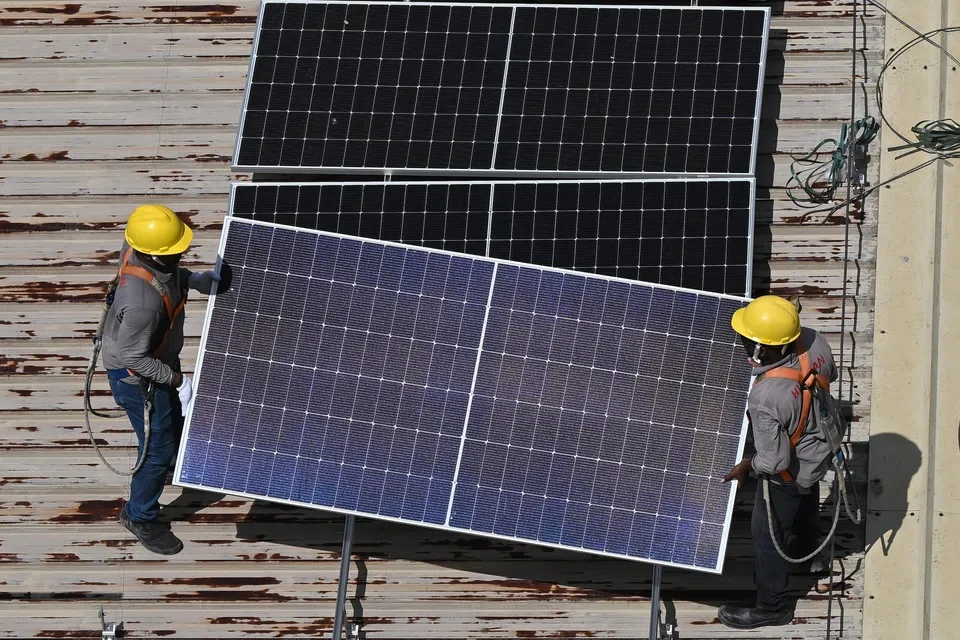
The study, released at Singapore International Energy Week, focuses on rooftop solar, decentralised energy systems such as mini-grids, battery-energy storage systems and offshore wind. It selected these areas for their potential to attract commercial capital through blended finance, as well as for the possibility of extending electricity access to communities that lack it.


How blended finance fits
Blended finance combines capital with different risk tolerances. Development finance institutions, multilateral development banks, philanthropists and public-sector funders can provide concessional or catalytic funding to help bring commercial investors into projects that matter for environmental or social reasons but cannot yet attract ordinary market financing on their own.
That distinction sets a boundary on how the capital should be used. Where a project is already commercially bankable, concessional funding is not the intended tool; the case for support rests on whether the project would otherwise fail to proceed. The approach is meant to help projects find a route toward commercial viability, while sharing some of the risks that currently deter lenders and investors.

The practical question is where that support can change project economics. Guarantees may reduce lenders’ exposure to borrower or project risks. Aggregating smaller projects can make them more attractive to finance as a portfolio. Risk-sharing facilities with local financial institutions can also support lending to off-grid solar businesses by limiting lenders’ net loss exposure.

Three markets, different financing needs
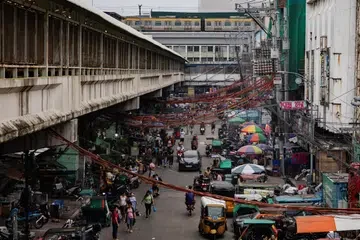
In Indonesia, the study sees opportunities in rooftop solar and decentralised energy. The country’s dispersed geography makes smaller-scale energy solutions relevant, but individual projects may be too small or risky to secure attractive financing. Combining projects in remote areas could improve their economics. Credit guarantees may also help larger projects secure longer loan tenors or face lower collateral requirements.

For off-grid solar developers and operators, portfolio guarantees and risk-sharing arrangements with local lenders could widen access to credit. These structures address a core financing problem: lenders may be reluctant to finance projects when they have limited experience with the borrower, the technology or the project’s operating conditions. Pooling projects and sharing defined risks can help bridge that gap, though it does not remove the need for viable projects and capable operators.

The Philippines presents a different profile. Its renewable energy market is described as mature, limiting the role for blended finance in that segment. The study instead points to decentralised solutions, where combining smaller projects could make financing more workable, and to battery storage. The distinction matters: a financing structure suited to an early market may be unnecessary where commercial activity is already established, while newer or smaller segments may still need support to attract capital.
In Vietnam, rooftop solar may benefit from targeted financing for particular customer groups, including corporate offtakers. The study characterises the solar market as relatively mature. Battery storage and offshore wind, by contrast, are at an earlier stage. There, catalytic finance could help support initial deployment and create financing structures that give lenders more familiarity with the technologies.
Project preparation and infrastructure remain constraints
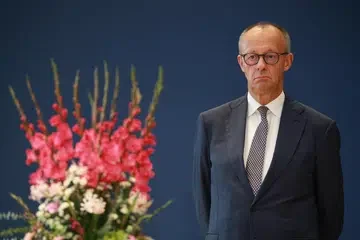
Financing alone is unlikely to determine the pace of deployment. At a panel discussion at Singapore International Energy Week, Sharad Somani, KPMG’s partner and head of infrastructure for Asia-Pacific, said clients were frustrated with the speed of renewable energy development in South-east Asia. He compared the region’s project pipeline with activity in the Middle East, where he said more than 6 gigawatts of renewable energy had been completed over the last five years. In South-east Asia, he said, the amount was “not even a 10th of that.”

Somani pointed to extensive project preparation, prioritising a small number of critical projects and taking a programmatic approach as ways to speed deployment. Standardised contracts were one example of that approach. For investors and lenders, a clearer, more repeatable project process can make opportunities easier to assess and finance, while a thin pipeline limits the number of projects that can reach that stage.
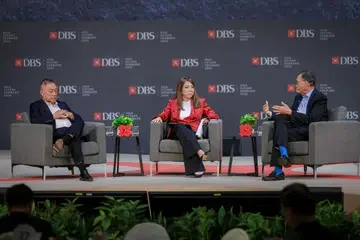
Tan Sue-Ern, head of the International Energy Agency regional cooperation centre in Singapore, highlighted incomplete frameworks for battery storage and offshore wind. She also cited gaps in grid connections, which can hinder both the deployment of renewable assets and their integration into power networks. Those constraints shape the financing case: capital can support a project, but it cannot by itself connect a facility to the grid or fill a pipeline of well-prepared opportunities.
The US$3.7 billion estimate therefore frames a need across four technologies and three markets, rather than a single pool of capital with one solution. The allocation will depend on where projects remain difficult to finance, how local lenders assess risk and whether infrastructure and project preparation keep pace. The next test is whether blended structures can help viable projects reach investment readiness while preserving concessional funding for the gaps it is intended to address.