CICT Q3 NPI climbs 13.8% to S$334.9 million as acquisitions lift income
Paragon and other assets drove CICT’s Q3 growth, while retail income fell and borrowings rose. Occupancy and rent reversions remained firm.
CapitaLand Integrated Commercial Trust’s (CICT) third-quarter growth reflects a larger portfolio, with Paragon and other assets lifting income even as retail revenue declined. Net property income (NPI) rose 13.8 per cent year on year to S$334.9 million for the three months ended September, while revenue increased 15 per cent to S$464.5 million.

The nine-month figures show the same expansion, though at a slower pace: NPI grew 10.4 per cent to S$965.4 million and revenue rose 10 per cent to S$1.3 billion. Both measures were at 75 per cent of DBS Group Research’s full-year estimates, which the brokerage described as “tracking well”.
Acquisitions and asset works shape growth
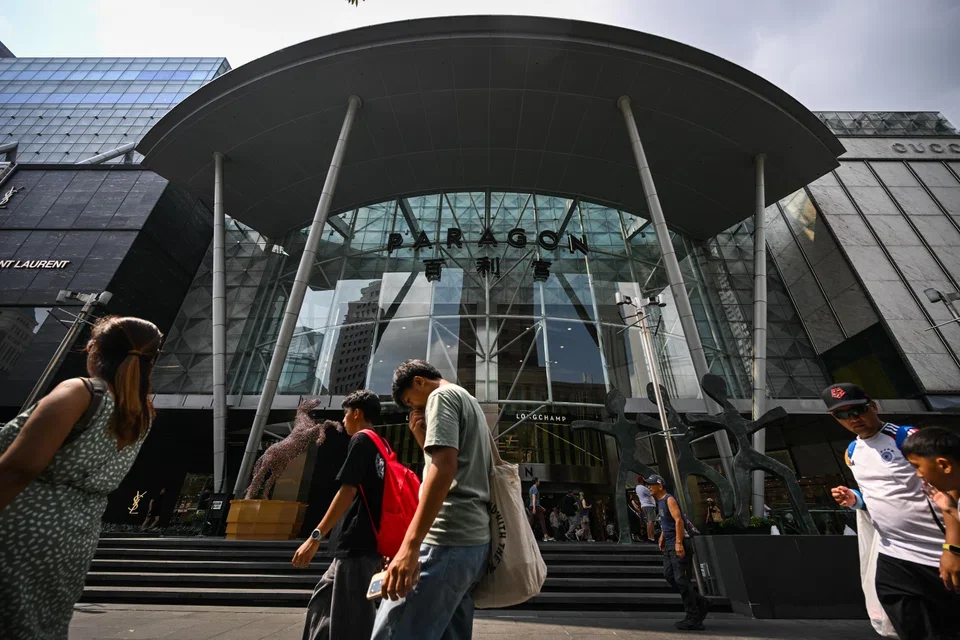
Paragon, acquired in July 2026, was a major contributor. Income also benefited from Gallileo in Germany following asset enhancement works and from CICT’s increased interest in CapitaSpring. The trust paid S$1 billion for the 55 per cent interest in CapitaSpring’s office and retail component that it did not already own.

These additions more than offset the effect of asset sales in the reported growth, but divestments reduced the portfolio’s contribution. CICT sold Bukit Panjang Plaza and Asia Square Tower 2; the latter transaction was completed on Sep 17 and generated net proceeds of about S$2.45 billion.

The mix matters when interpreting the headline increase. Acquisitions can raise income by adding properties, while divestments remove revenue and NPI from the portfolio. The reported growth therefore combines changes in asset ownership with operating performance at properties held by CICT. The figures provided do not break out the separate contribution from each factor.

Retail income fell despite tenant activity
CICT’s retail portfolio recorded lower revenue and NPI in Q3 than a year earlier. Revenue was S$143.5 million, down from S$151.7 million, while NPI fell to S$99.6 million from S$108.5 million. For the nine months, retail revenue was S$435.3 million and NPI was S$310.2 million.

The declines came alongside healthy tenant sales across the portfolio, supported by seasonal promotions and new store openings. Examples included Italian restaurant Osteria Mozza at Ion Orchard and frozen yogurt shop Yochi at Westgate. Excluding Paragon, tenant sales increased 2 per cent over the nine-month period.

Occupancy remained high. Total committed occupancy was 96.1 per cent at end-September, up from 95.6 per cent at end-June. Retail occupancy stood at 97.3 per cent on Sep 30; suburban malls recorded 99.1 per cent and downtown malls 96 per cent. These figures indicate strong take-up of available space, though occupancy and tenant sales alone do not explain the fall in retail income.

Rent reversions provide another measure of leasing conditions: year-to-date reversions were 7.1 per cent for offices and 4.6 per cent for retail. Within retail, suburban malls recorded 4.6 per cent and downtown malls 4.5 per cent. The manager expects mid-single-digit reversions in both office and retail through 2027. Jefferies analysts Wilson Ng and Geraldine Wong characterised that expectation as “conservative”.

Higher borrowings accompany the expanded portfolio
CICT’s aggregate leverage rose to 39.7 per cent at end-September from 37.4 per cent at end-June. Total borrowings increased to S$11.1 billion from S$9.9 billion over the same period. The average cost of debt edged down 0.1 percentage point to 2.8 per cent, while the portfolio’s weighted average lease to expiry was 3.1 years.

The balance sheet figures put the income growth in context: the trust added assets and increased borrowings, even as its average debt cost declined slightly. DBS cited resilient operating fundamentals, while Jefferies’ Ng and Wong said CICT was on track to meet their full-year distribution per unit growth forecast of 4 per cent. These are brokerage assessments, and the reported figures do not guarantee that forecast will be achieved.

Upgrades and development add future milestones
Asset enhancement projects are under way at several properties. Work at Lot One Shoppers’ Mall is slated for completion in the first quarter of 2027, while projects at Plaza Singapura and The Atrium@Orchard are expected to finish in the fourth quarter of 2028.
CICT completed upgrades at Tampines Mall in Q3 2026. About 97 per cent of the revamped space was committed or in advanced negotiations. The S$24 million project introduced 16 brands, including Sephora and Goldheart, and the manager expects a return on investment of about 7 per cent. DBS sees potential for additional rental uplift as the projects are completed, but the timing and scale will depend on leasing and the performance of the upgraded space.
Construction of the commercial component of Hougang Central is expected to start in 2027, with completion targeted for 2030 or 2031. The development has an estimated cost of S$1.1 billion. These projects provide a longer-term source of potential leasing income, while requiring CICT to manage the cost and execution of a substantial upgrade and development programme.
CICT units were trading 1.3 per cent, or S$0.03, higher at S$2.29 as at 3.41 pm on Thursday. The quarter’s figures point to portfolio expansion and firm occupancy, alongside weaker retail income and higher borrowings. How upgrades translate into rent, and how the enlarged portfolio performs against its financing costs, will shape the next phase of the trust’s results.


