Singapore SME Investment Into Malaysia More Than Quadruples at Standard Chartered
Standard Chartered says Singapore SME investment it facilitated in Malaysia grew more than fourfold, with much of it entering the Johor-Singapore zone.
Cross-border activity is picking up among small and medium-sized businesses using Standard Chartered’s Singapore and Malaysia networks. The bank says the value of investment into Malaysia that it facilitated for Singapore SME clients grew more than fourfold over the past year. A significant share went to the Johor-Singapore Special Economic Zone (JS-SEZ), though the bank did not disclose the amounts involved.

The flow also runs in the other direction: investment into Singapore facilitated for the bank’s Malaysian SME clients doubled over the same period. Those growth rates point to stronger two-way business interest, but without figures for the starting levels or total sums, they don’t show how large the activity is in absolute terms.
The practical demands of operating across the border are visible in the experience of Stolz Engineering. Founded in Singapore in 2007, the cooling-tower specialist expanded into Johor in 2024. It has its headquarters and engineering centre in Singapore, while its facility for assembly, installation and delivery is in Senai.

Cross-border operations bring practical hurdles
David Ling, Stolz’s senior manager of operations, described a list of tasks that came with establishing the Johor operation: securing business and signboard licences, meeting import and export requirements, arranging logistics and recruiting workers with suitable skills. These are operating needs that can add time and coordination costs for a smaller company building a presence in a nearby market.
Moving equipment between the two locations has also required careful preparation. Ling recalled an oversized shipment bound for Singapore being turned back at the Second Link checkpoint because the company lacked a special permit. He said the permit would normally have taken a month to obtain; Stolz secured it in half that time.
Standard Chartered helped Stolz source Malaysian workers for its Senai facility, Ling said. The example helps explain why the bank’s proposition for cross-border SMEs extends beyond financing. Local hiring, documentation and connections to business-service providers can all affect whether a company can turn an investment into a functioning operation.

Stolz plans to expand its cooling-tower business in Malaysia. That intention gives the company a stake in how smoothly its two-site model can serve customers, move goods and secure the skills it needs. The source does not specify the scale or timing of the planned expansion.
Support beyond credit
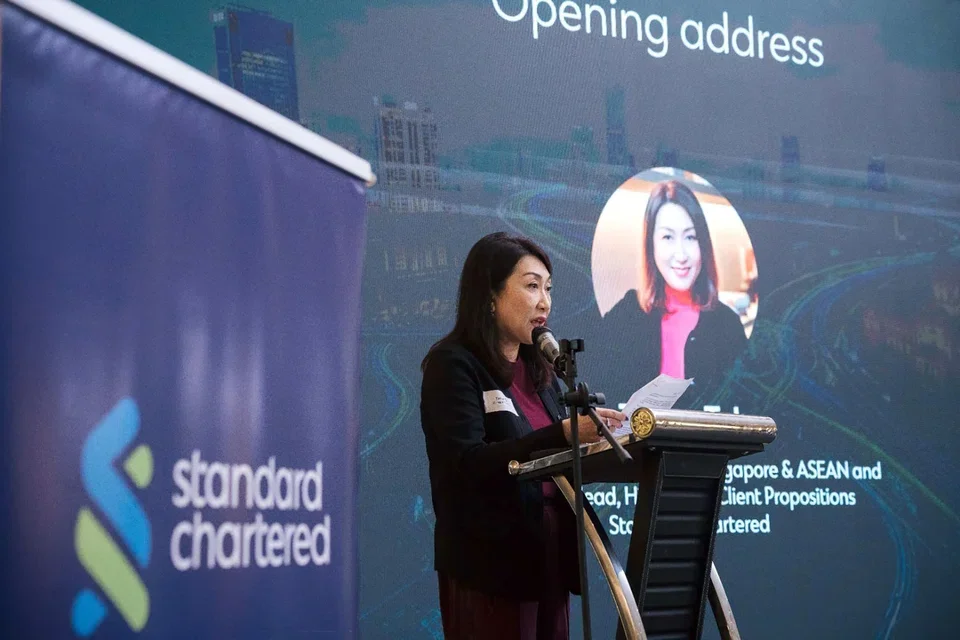
Teresa Tah, who oversees medium-sized enterprises in Singapore and Asean at Standard Chartered and is the bank’s global head of high-value client propositions, said companies crossing the border need local market knowledge and links to business-service partners as well as financing.
Her view points to a broader challenge for SMEs entering another market: access to capital may fund a facility or equipment, but it doesn’t by itself resolve day-to-day questions about permits, staffing, shipping and local business practices. Smaller firms may have fewer internal resources to handle those issues than larger companies, making reliable local contacts a meaningful part of expansion support.

Tah also said opportunities in the JS-SEZ extend to SMEs supplying goods and services to larger businesses. That offers one route into the zone’s activity for companies that may not be establishing a major production base of their own. The potential benefit depends on whether they can meet customers’ requirements and build durable commercial relationships.
“We have observed that Singapore and Malaysian companies increasingly recognise the value of tapping into each other’s strengths,” she said.
She added: “The JS-SEZ comes at a pivotal time as businesses seek to capture opportunities arising from AI, digitalisation and regional growth.”


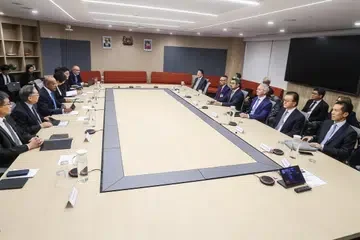
Participants at Standard Chartered’s JS-SEZ Business Mission and Forum in Kulai, Johor, on Thursday (Oct 29). PHOTO: STANDARD CHARTERED
A new banking offer and open questions
At a business forum in Kulai on Thursday, Standard Chartered introduced a cross-border banking proposition for SMEs operating in Singapore and Malaysia. It includes six months of free outward telegraphic transfers between the two countries, interest optimisation and access to the bank’s network of ecosystem partners. More than 100 business leaders and industry stakeholders from both countries attended the event.
The offer addresses some of the financial mechanics of cross-border operations, including payments and management of funds. Its value to individual businesses will depend on how frequently they transfer money, their banking needs and whether the partner network can help with the operational barriers they face. The bank did not provide details on uptake or the cost of the proposition after the six-month period.
The reported investment growth and Stolz’s experience provide two useful measures of momentum: the bank’s facilitated flows have risen sharply, while a Singapore-founded company has built an operating footprint on both sides of the border. The figures remain incomplete without disclosed amounts, and the company example does not establish how broadly other SMEs are expanding. For businesses assessing the zone, the next test is whether stronger interest translates into sustained operations, workable logistics and lasting commercial ties.

Taiwan’s FIC Global targets US$2 billion revenue from Johor operation in 2027

Senai’s second act: JS-SEZ reshapes Johor’s factory town as Singapore’s industrial ally


