Lagarde to Leave ECB in February 2027 as Inflation and Bond Costs Pressure Europe
Christine Lagarde will leave the ECB on Feb 7, 2027, amid energy-driven inflation risks, higher borrowing costs and a closely watched succession.
Christine Lagarde’s early departure puts leadership succession alongside a difficult monetary policy trade-off at the European Central Bank (ECB). She will leave on Feb 7, 2027, more than eight months before her scheduled term end in October, while the bank is confronting renewed energy-driven inflation and higher borrowing costs, particularly in France.
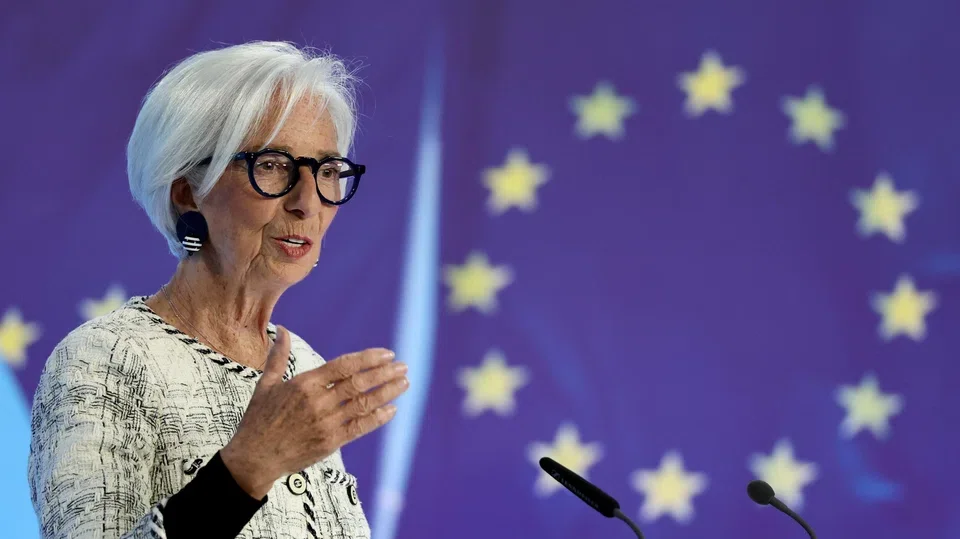
The timing gives European leaders room to select a successor before Lagarde’s term was due to end. The choice will come as the ECB weighs how far to raise rates to contain inflation without adding to pressure on households and businesses already facing more expensive credit.
Lagarde, 70, announced her resignation on Thursday, Oct 29. “I leave this institution with a sense of good work done and an ECB that is fit for the future,” she said in a short video shared on social media. A source with direct knowledge of the matter said she wanted the freedom to weigh in on matters in France and globally. As ECB president, she was expected to maintain political neutrality to protect the institution’s independence.
That explanation has drawn sharply different assessments. Markus Ferber, a German member of the European Parliament, called the early departure “the wrong signal”, arguing that a departure timed around national electoral events could weaken trust in an institution expected to stand above domestic calculations. Marcel Fratzscher, who leads the German think tank DIW, described the decision as “a strong sense of responsibility towards Europe”, saying it gives European institutions time to appoint a successor.

Lagarde has said she would not seek the French presidency. She has, however, said she would advocate for pro-European values in France “in whichever capacity” she considered most effective.

A leadership handover with other posts in play
The process to choose Lagarde’s replacement is expected to begin immediately, European Council president Antonio Costa said. The appointment may form part of a broader set of leadership changes at the ECB: executive board member Isabel Schnabel is due to leave in early January, while chief economist Philip Lane is due to depart in May.
Klaas Knot, former head of the Netherlands’ central bank, and Pablo Hernandez de Cos, former head of Spain’s central bank, are widely viewed as leading candidates. Danske Bank economist Piet Haines Christiansen said both were “very competent, well established central bankers” and suggested the market response would be limited.

That view reflects the weight investors place on the ECB’s established processes as well as on the individual at its head. Simon Dangoor, Goldman Sachs’ head of fixed income macro investing, said the bank’s institutional behaviour was likely to outlast Lagarde and remain similar under a successor. The limited market reaction to the announcement was consistent with that assessment, although leadership changes can still draw attention to the bank’s independence and its approach to policy.

Lagarde’s term was scheduled to run until the end of October 2027, and speculation about an early exit had been building for months. The World Economic Forum was seen as a possible next destination, but it declined to comment. The source provides no confirmation of Lagarde’s plans after leaving the ECB.
Rates face pressure from two directions
The departure comes as the ECB is in a rate-hiking cycle intended to keep an oil-price shock linked to the Iran war from spreading into other prices and wages. At the same time, a sharp rise in bond yields, especially in France, has increased borrowing costs for households and businesses. Lagarde has said those tighter financing conditions will weigh on growth and inflation.
For the bank, the difficulty is that these pressures pull policy in different directions. Higher energy costs can lift inflation and strengthen the case for rate increases. More expensive financing can curb demand and economic activity, adding to the strain on borrowers. The ECB must judge how persistent the energy shock will be and how much higher borrowing costs are already restraining spending.
The ECB was widely expected to keep its deposit rate at 2.5 per cent on Thursday, while signalling that a further increase, potentially in December, remained likely. Oliver Rakau of Oxford Economics said the bar for a December increase was likely to be low if higher energy prices prompted another upward revision to the ECB’s inflation forecast. The bank was scheduled to announce its decision at 1315 GMT, followed by Lagarde’s press conference at 1345 GMT.
Money markets were pricing in three more ECB rate increases by the end of next year, which would take the deposit rate to 3.25 per cent. That level is widely seen as restrictive for economic growth. The expected path is a market projection, not a confirmed policy commitment; energy prices, inflation forecasts and financing conditions could all affect the bank’s decisions.
The succession and rate outlook therefore meet at a consequential moment. Investors will be watching whether the appointment process supports confidence in the ECB’s continuity, while borrowers and businesses face the immediate effects of higher financing costs. The next signals will come from the bank’s rate decision, its assessment of energy-driven inflation and the identities of the people chosen for its senior roles.


