Hong Kong Fire Report Traces 168 Deaths to Renovation and Oversight Failures
A panel’s report links the 2025 blaze to contractor and consultant decisions, weak site supervision and unresolved resident complaints.
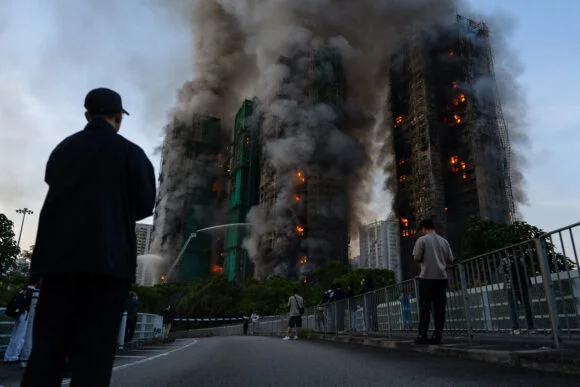
The report on Hong Kong’s deadly Wang Fuk Court fire describes a chain of failures across a renovation project and the systems meant to oversee it. The blaze killed 168 people last November. A judge-led panel’s report, released Thursday, faulted the main contractor and project consultant, while also identifying serious shortcomings across four government departments.

The account points to a central risk in large renovation projects: safety depends on many separate decisions working together, from material selection and site conduct to complaint handling and inspection. At Wang Fuk Court, the report says, those safeguards failed to interrupt hazards that residents had repeatedly raised. The resulting conditions helped the fire spread rapidly.
Site practices and material choices
Prestige Construction & Engineering Co. Ltd, the main contractor, and Will Power Architects Co, the project consultant, were aware of fire risks, the panel found, yet did not act on residents’ complaints. Prestige failed to maintain proper oversight at every level and did not effectively enforce its anti-smoking rules, despite repeated complaints about smoking at the site.
The contractor also declined a request from the estate’s management committee to carry out the work in phases. Instead, renovation work proceeded across all eight blocks at the same time. That left every block enclosed in combustible scaffolding and other materials, a condition the report says contributed to the fire’s rapid spread. Staging work across fewer buildings at once could have limited how many blocks were exposed to the same site conditions, though the report’s findings center on what happened at this estate.

The panel identified the likely ignition source as a “glowing source…likely a cigarette.” That finding connects the complaints about smoking with a broader failure to control day-to-day risks on site. The report does not describe smoking as the only factor: it also points to combustible materials around the buildings and weak oversight of the renovation work.
Will Power, whose role included consulting on the project, failed to provide effective independent supervision of Prestige, according to the report. It approved flammable foam boards and scaffolding nets that were not fire-retardant, despite knowing about the risks and initially expressing concern. The panel said the consultant did not intervene on key safety matters and instead enabled or accepted cost-cutting and unsafe practices. That failure, it said, broke the trust homeowners had placed in the consultant.
Complaints without a clear owner
The report also describes a fragmented response to fire-safety concerns. No department took effective ownership of several issues, and complaints “fell into a vacuum” as they passed between offices. Multiple departments failed to properly investigate residents’ documented concerns about fire hazards, smoking, materials and procedural irregularities.

The Labour Department’s handling of complaints about smoking at the site and the fire resistance of nets and foam boards was unsatisfactory, the panel found. The Independent Checking Unit (ICU) also failed in its supervisory responsibilities. The report characterizes the ICU’s systemic shortcomings and operational lapses as major contributors to the unsafe conditions.
For residents, repeated complaints are meaningful only if someone assesses them, identifies who is responsible and follows up on the response. The report’s account suggests that this process broke down: concerns crossed departmental lines without resolution. That kind of gap can leave hazards in place even when residents have made them known and documentation exists.
Material verification was another weak point. The report found inadequate checks on temporary items such as scaffolding nets, foam boards and plastic sheeting. Authorities relied on paper certificates, without laboratory testing or samples taken at the site, allowing materials that were not fire-retardant to be used. A certificate can record what a supplier claims about a product; testing or sampling checks whether the material present on a specific project meets that claim.

Industry practices add another layer
The panel placed the fire within a wider account of problems in Hong Kong’s building-maintenance and renovation industry. It cited unlawful and questionable practices, including bid-rigging, and said some participants had triad affiliations. “Some of them have triad affiliations … The committee is of the view that such a corrupt eco-system is intolerable,” the report said.
The Competition Commission and the Independent Commission Against Corruption found bid-rigging to be widespread, systemic and long-standing among building-maintenance contractors. The report says some operations were orchestrated by syndicates, sometimes with triad involvement, that coordinated which contractors would win tenders through cover bidding, bid suppression or bid rotation.
Those practices matter to the fire findings because contractor selection and project oversight shape the conditions under which work is carried out. The report does not say bid-rigging started the blaze. It does, however, describe a sector where distorted tendering and cost-cutting could sit alongside inadequate supervision and unsafe site practices.
The panel’s account therefore assigns responsibility across several parts of the project and oversight chain: contractor conduct, the consultant’s failure to act independently, and departments that did not resolve documented hazards. It also identifies deeper weaknesses in material checks, communication and enforcement. For homeowners and residents, the findings underline how quickly safety concerns can lose force when no one is accountable for closing the loop. The report’s enduring question is whether those responsibilities will be clear enough to prevent the same gaps from appearing on future renovation sites.
Related: Hong Kong’s Deadliest Fire in Decades Followed a Year of Safety Complaints


