India’s Data Centre Tax Holiday Draws Cloud Demand, but Operating Rules Remain Pending
Tax certainty and AI demand are drawing global cloud players to India, while pending rules and infrastructure costs could slow investment.
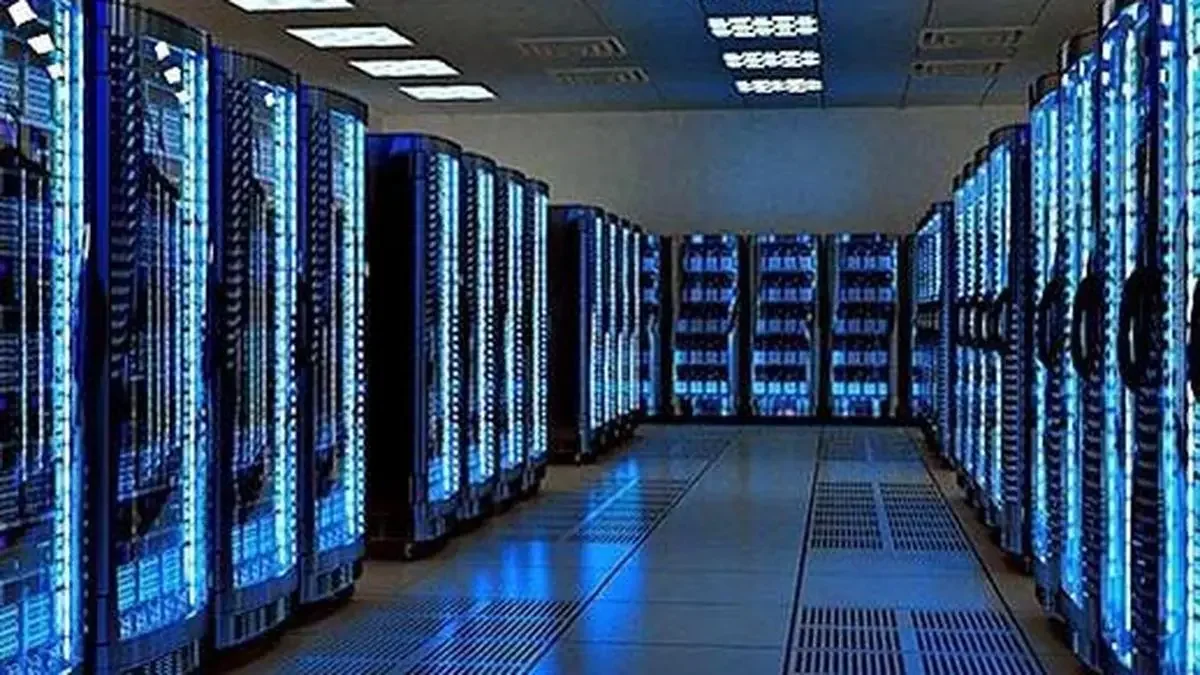
India’s data centre tax holiday is drawing more attention from foreign cloud and hyperscale companies, but the incentive’s practical reach remains uncertain until operating rules are issued. For investors and operators, the opportunity rests on more than tax treatment: available capacity, connectivity, power and financing conditions will shape how quickly India can serve workloads for customers abroad.
The incentive, announced on February 1, 2026, is intended to exempt qualifying foreign companies from Indian tax on income earned from customers outside India when they provide cloud services using data centre services located in India. The holiday runs until the financial year 2046-47. It is conditional: both the foreign company and the Indian data centre must be notified by MeitY, among other requirements. The rules needed to put the arrangement into operation have not yet been notified.
Demand has several sources
Equinix Managing Director for India Manoj Paul says the tax certainty strengthens India’s position as a destination for cloud and AI infrastructure. He also points to cloud modernisation, digital financial services and increasingly data-intensive workloads as drivers of demand. Equinix is seeing more requests from cloud service providers for Indian capacity and interconnection, including for work serving users outside the country. Paul says 76 percent of Equinix customers operate across more than two regions, with regions spanning areas such as the Americas, Europe and Asia Pacific.
Sify Infinit Spaces CEO Sharad Agarwal describes the tax clarity as a factor that can make new foreign investment easier. Over the preceding six months, he says, conversations with foreign players increased substantially. He also credits rising AI workloads, shifts in preference linked to the Middle East crisis and faster deployment in India. The country’s data centre industry built capacity ahead of demand, Agarwal says, and that excess is now shrinking.
That spare capacity gives operators room to respond as demand grows, but the pace of absorption matters. If new workloads arrive faster than facilities and supporting infrastructure can be brought online, available capacity may tighten. If demand takes longer to convert into signed commitments, operators that built speculatively will have to fill their sites before the economics of expansion improve.
Capacity forecasts point to a rapid buildout
JLL analysts forecast that India’s data centre capacity will rise from 1.6 GW in mid-2026 to 6 GW by 2029, which would make it Asia’s fastest-growing digital infrastructure market. They attribute the expected expansion to tax holidays, state incentives and more than $50 billion in commitments from global hyperscalers. Those companies are expected to build nearly 30 per cent of new capacity themselves.
JLL reports that first-half 2026 absorption reached 101 MW, more than 20 per cent above the three-year average. Pre-committed hyperscale capacity made up 82 per cent of total absorption. That share suggests that large customers are already accounting for much of the take-up measured in the period, giving developers a clearer demand signal for some projects. It also leaves the broader market’s growth dependent on whether commitments translate into operating facilities and sustained use.
These forecasts describe a large expansion, but they do not settle how much capacity will support international cloud workloads or how quickly it will become commercially available. The tax treatment may improve the case for locating those operations in India. The physical and financial conditions required to build and run them will determine how much of the projected growth can be delivered.
Connectivity is promising; costs remain a constraint
Paul considers it highly feasible for global companies to serve international customers from Indian data centres. He points to India’s position between Southeast Asia, the Middle East, Africa and Europe, and to new subsea cables landing in Mumbai and Chennai as improvements to international connectivity. For operators, those links matter because overseas workloads depend on reliable connections between facilities and users in different regions.
Tax relief alone, however, may not remove other obstacles to serving foreign customers at scale. Piyush Somani, president of the Bharat Digital Infrastructure Association and founder of ESDS, cites customs provisions, FEMA, Reserve Bank of India rules for external commercial borrowing and lending, SARFAESI, and the 18 per cent IGST charged upfront on GPU imports as barriers raised by the industry. His association has proposed a lender exit framework modelled on aircraft leasing. It has also suggested deferring GST through postponed import accounting and allowing bonded status under Section 65 of the Customs Act.
Those proposals point to the costs and financing structures that can influence project economics alongside the tax holiday. GPU imports, in particular, connect the tax question to the hardware needed for AI workloads. The treatment of those imports can affect the cash required before a facility is operating and earning revenue.
Implementation is the next test
A senior data centre executive says the tax holiday has been defined and announced, with operationalisation still in progress, and expresses confidence that it will not be withdrawn. That confidence may help explain why interest is rising before the qualifying process is fully clear. Yet companies considering projects still need to understand how notification requirements will work and how the incentive will interact with the other costs and rules raised by the industry.
The market’s near-term test is whether that clarity arrives in time to support investment decisions, while capacity, subsea connectivity and financing arrangements keep pace with demand. India has a strong set of ingredients for serving global cloud workloads. Turning interest into durable operations will depend on how those ingredients come together in practice.


